
1,000 kg Four-Loop Bulk Bags for Dry Sand and Aggregate
For dry sand or aggregate, put an open-top, flat-bottom four-loop FIBC on your 1,000 kg shortlist. One catalog example measures 90 × 90 × 120 cm. Measure bulk density and filled size with your own material to check pallet fit. Your handling team should also approve the exact bag and loop arrangement.
Before requesting a sample
- Start with the product and the lineFor dry sand, verify the bulk density at the condition you actually receive. For coarse aggregate, identify the largest angular pieces and where they strike or rest against the bag. The same net load can fill to a different height and stress different areas.
- Inputs for your first reviewSend us material grade, bulk density if known, target net load and your pallet dimensions. We can compare those inputs with the 90 × 90 × 120 cm catalog candidate on a drawing and put any change in a separate quote line.
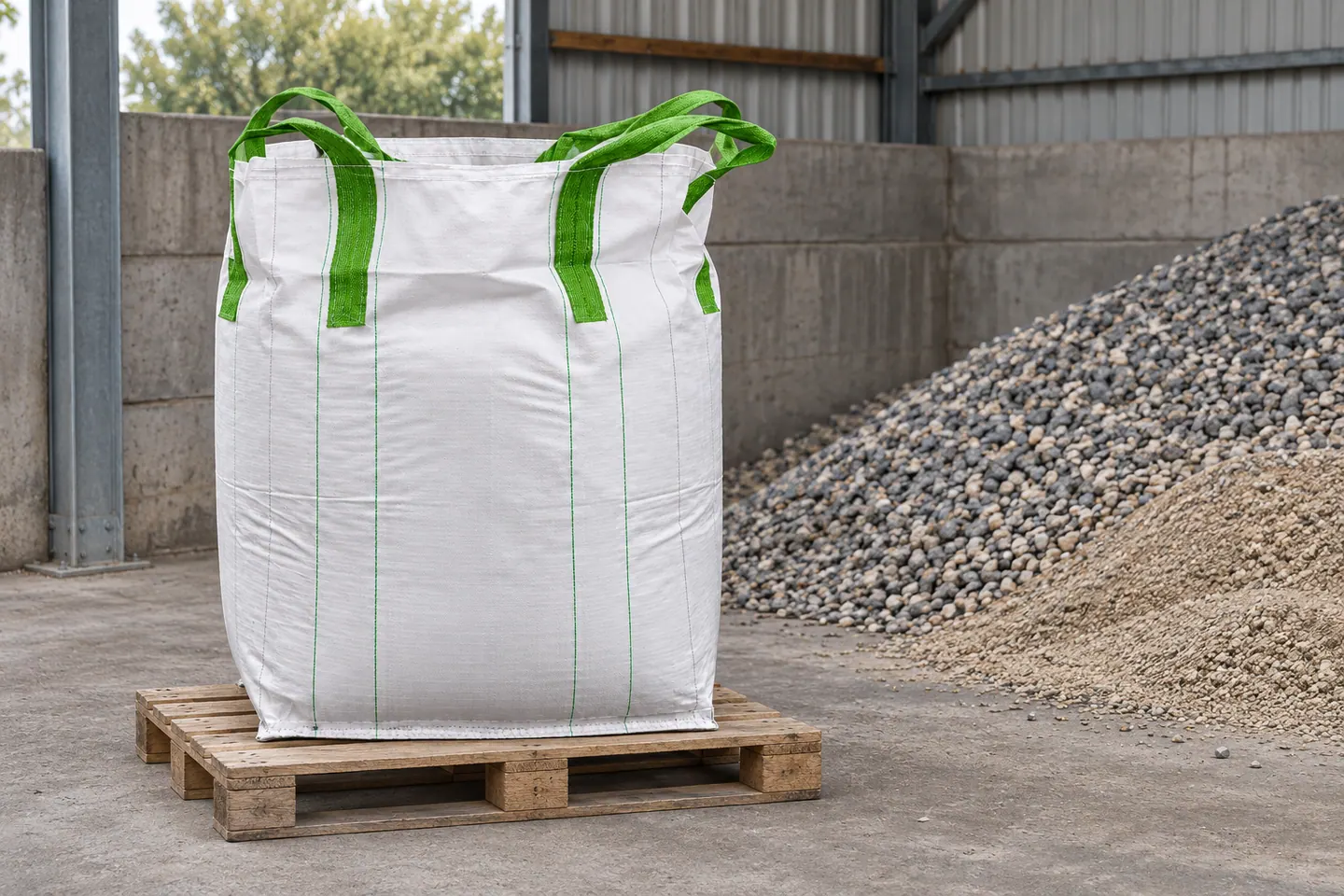
Open-top and flat-bottom candidates
Qingdao Novapack Packaging Co., Ltd. manufactures woven polypropylene FIBCs in Qingdao, China. Tell us how you will fill and handle this bag so we can review the drawing, components and the checks you need on the selected build.
Our cross-corner construction gives you a starting shape for an open filling station. Compare the load rating on the exact bag, loop position and base construction before you choose a sample.
An open top makes sense when the material drops from a wide chute and a sleeve connection is unnecessary. A fixed flat bottom fits operations that empty by an approved tipping or other controlled unloading method. A bottom discharge sleeve belongs on a separate shortlist if your site unloads into a fixed hopper.
Photograph the fill point and the actual unloading point. Confirm the clearance, dust requirement and the base style on the drawing before asking for a loaded sample.
Example calculation: 1,000 kg at a measured bulk density of 1,500 kg/m³ occupies about 0.67 m³. Use this as a volume input. Check the filled shape and the exact rated load separately.
Compare catalog candidates
| Catalog candidate | What the description shows | What to confirm for your order |
|---|---|---|
| 1 Tonne PP FIBC Bulk Bag, 90 × 90 × 120 cm – Open Top, Flat Bottom and Cross-Corner Loops | 90 × 90 × 120 cm; open top, flat base, 1,000 kg listed | Compare the actual filled footprint with your pallet |
| Custom White PP FIBC Container Bag for Construction – 1 Tonne, Cross-Corner Loops and Open Top | Open top, flat base and a 1,000 kg listing | Confirm your preferred cross-corner loop dimensions |
| 1 Tonne Jumbo FIBC Bulk Bag for Cement and Sand – White, Full-Open Top and Flat Bottom | 1,000 kg catalog candidate for sand and cement | Check actual dry aggregate size and seam contact on the sample |
Technical references ISO 21898 for non-dangerous goods · FIBCA safe-handling guidance
Cutting and Sewing a Four-Loop Bag
Cut panel dimensions set the empty shape. The bottom seam and four loop attachments are part of the same load-bearing construction. Examine the sample where aggregate contacts the base and match the cross-corner or side-seam layout to the signed drawing. Filled overhang and load documentation remain separate acceptance checks.
Technical background PP tape for woven packaging and FIBC fabric
Custom White PP FIBC Container Bag for Construction – 1 Tonne, Cross-Corner Loops and Open Top
FIBC Manufacturing and Quality ChecksIn a four-loop bag, the loop webbing, its attachment to the body and the base seam all belong to the chosen assembly. A location change can alter fork access and change which construction the factory needs to document. Coarse aggregate also places local contact at the base and lower corners.
Ask for the fabric, loop arrangement and base seam to be indicated on the same revision. Keep close-up photographs of these three locations on the signed sample so the incoming team can identify the build again.
Loop geometry and forklift access
Use the fork spacing and available clearance at the filling station when discussing loop style. Check where the operator must reach the loops with an empty bag and have your handling team approve the loaded setup.
- Check fork engagement before loadingMeasure your fork section, useful spacing and the free space above the bag while it is under the filling station. Then compare those dimensions with the loop openings, position and reach shown on the drawing. A weighing frame or chute guard can limit access even when the bag fits the pallet.
- Acceptance recordRecord which machine and attachment the site team approves, and have the responsible team verify loop engagement on the actual equipment under its approved procedure before any loaded trial.
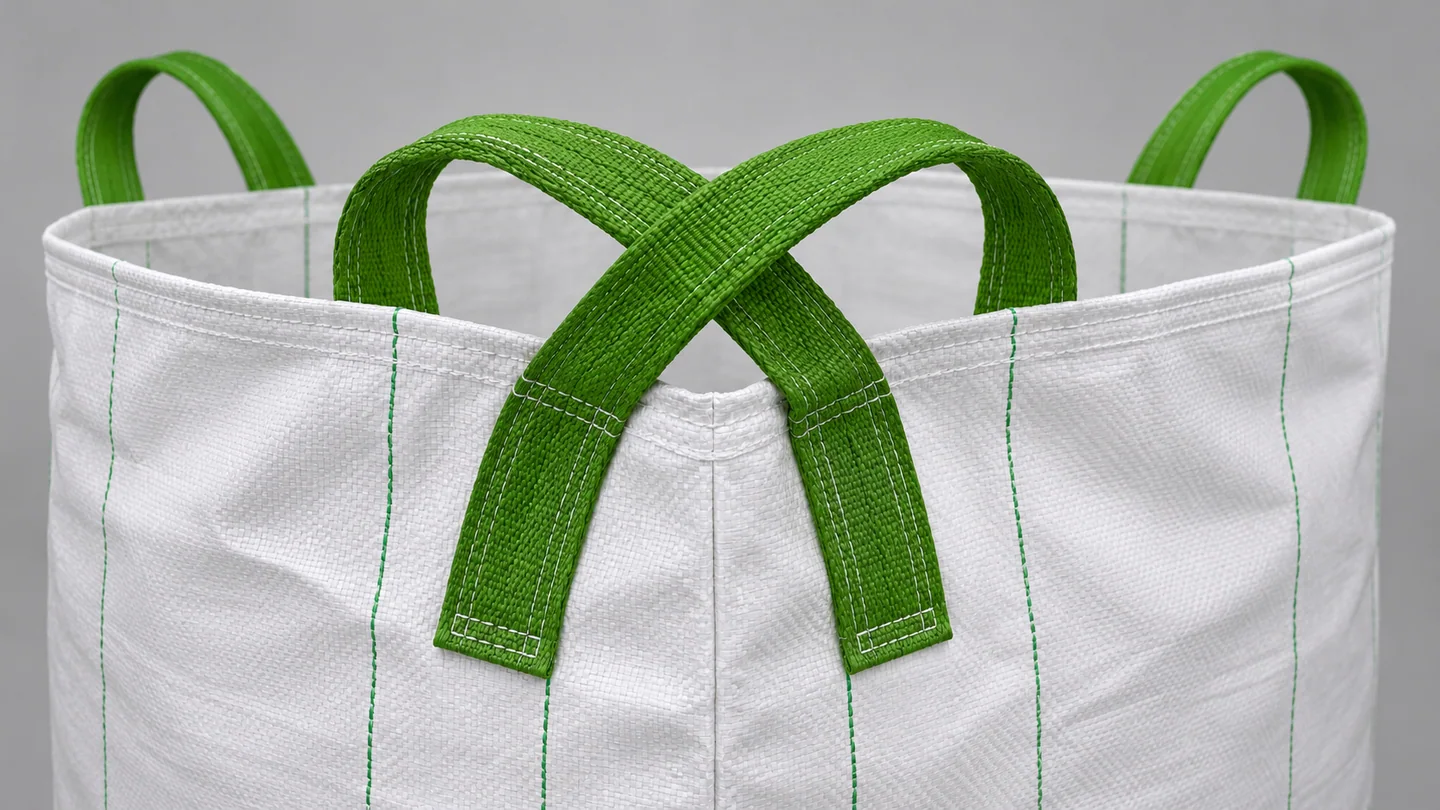
Pallet edges and the filled footprint
Record the widest point of the bag after an approved fill. Compare it with the actual pallet edge and the space available in the rack or container.
| Technical check | Measure both axes at the widest bulge after the fill has settled. A centered 1,040 mm filled profile on a 1,000 mm pallet would overhang 20 mm on each side. An off-center fill can leave a larger overhang on one edge, so record the four edge offsets separately. |
|---|---|
| For approval | For each sample, write down the net weight, settling time, pallet size, both maximum filled dimensions and the four edge readings. Use the strictest clearance from the pallet, rack or transport plan as the acceptance limit. |
A coarse aggregate check
Tell us the largest particle size and whether the material has abrasive or sharp edges. Your sample review should cover fabric wear, base contact and seam condition after your approved handling steps.
- Representative fill
Include your largest routinely handled particles and note angular or sharp pieces.
- Contact points
Mark the drop zone, lower corners and sewn bottom for a repeatable comparison.
- Release decision
Photograph the same points after the approved trial and record what needs revision.
Use a representative sample with the largest pieces and sharp edges you normally handle. Inspect the contact area where the drop first hits, along the lower corners and around the sewn base. Distinguish a surface scuff from a broken yarn, opened stitch or visible loss of fines.
Photograph the same points before and after the approved trial. Agree the reject conditions with the site team, and ask us to mark any proposed fabric or seam change on the next sample revision.
A loaded fit trial
Set a repeatable fill weight and measurement position. A photo from the same angle for each bag helps your warehouse team compare how the shape sits on the pallet.
- Make two samples comparableUse the same grade, weigh the net contents and record the fill settings, settling interval and pallet on both runs. An identical photo position helps put a corner bulge or tilt in context. Have the site team agree the trial route and stop conditions in advance.
- Acceptance recordKeep the results together on one sheet with the sample codes, measured footprint, condition by inspection point and pass or revise decision. Compare shipment pricing once the samples are technically comparable.
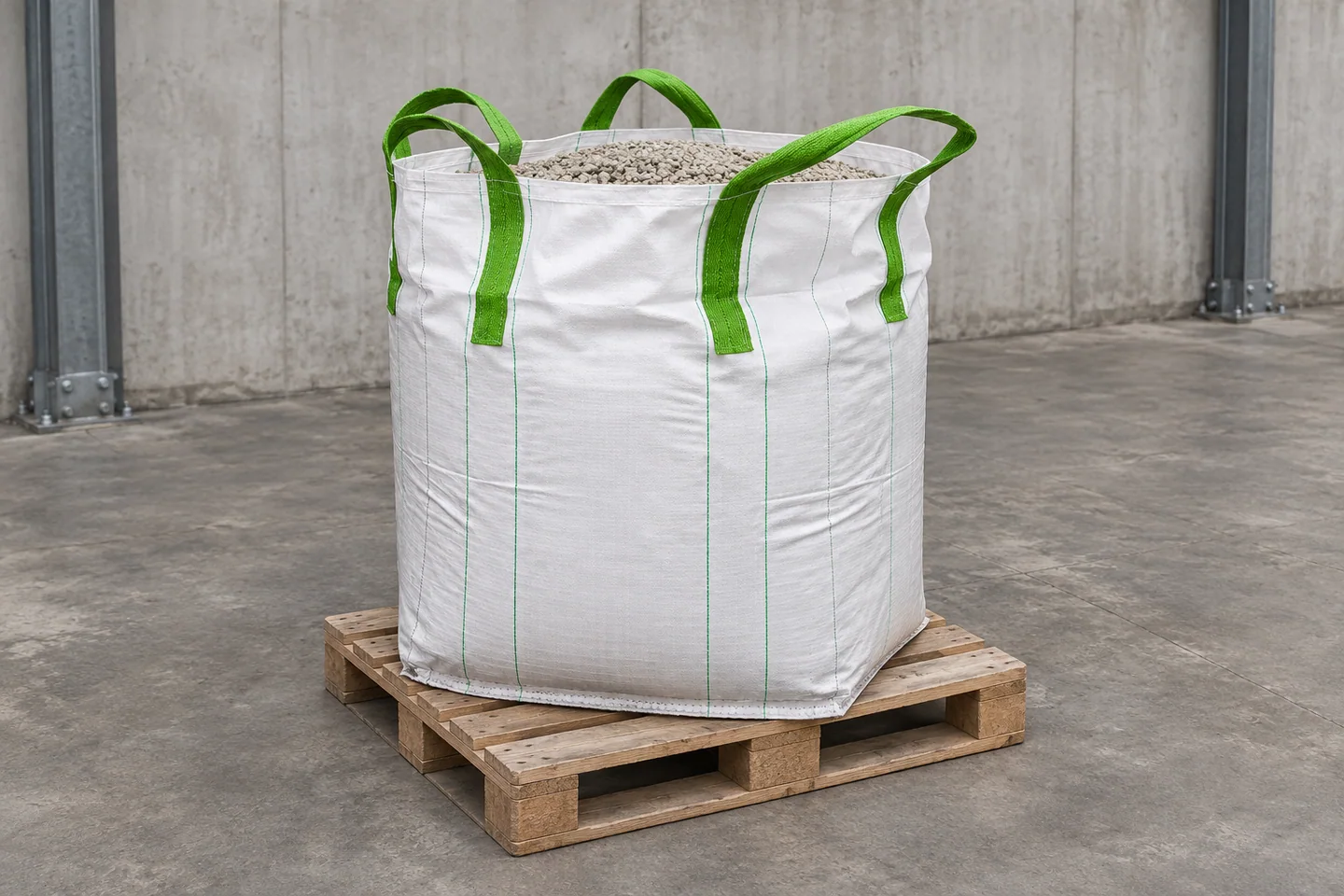
A signed bag rating
Ask for the drawing and rated load documentation for the exact body, loops and bottom you plan to buy. Keep those records with the model reference in your purchase order.
| Technical check | Read the model or drawing reference on the load evidence against the sewn bag and its label. Identify the body, base, loop geometry and intended use together. Keep the pallet-fit outcome as a separate checkbox because the load rating does not describe your actual filled footprint. |
|---|---|
| For approval | Before release, file the applicable rating record, approved drawing, bag-label reference and site acceptance together. Ask for a review when a later quote changes any load-bearing component or the intended conditions. |
Material samples for a fair comparison
Use your typical sand or aggregate in the comparison and record the product grade. Separate coarse and fine grades if they fill or settle differently.
- Document the material that drove the trialRecord the grade, the moisture condition at filling and the coarse end of the particle range. If a trial uses a substitute, make that visible on the approval sheet. Let the receiving team reproduce the trial conditions from the record.
- Acceptance recordSend a representative sample or photos with a scale reference. Identify the dusty fraction as well as larger fragments so the factory can discuss seam leakage and local wear separately.
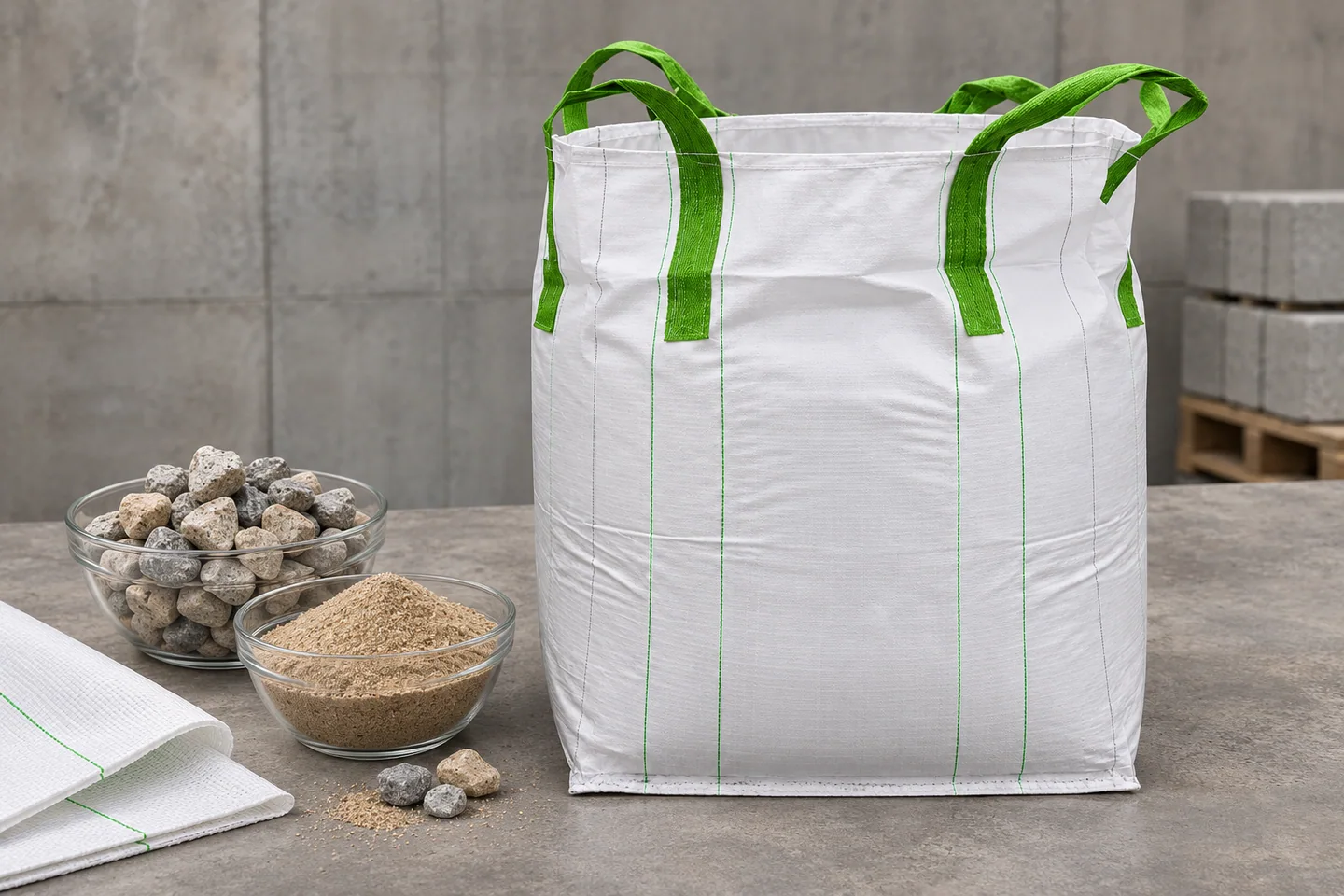
An enquiry for the sand or aggregate line
Send the material grade, target 1,000 kg load, fill dimensions, pallet size and forklift interface. We can use your drawings to narrow the candidates before samples are ordered.
Put target load, material, opening and base, end-user equipment, pallet limit and expected order quantity on one revision. Ask for price, sample cost, drawing assumptions and pieces per bale by candidate. Add the destination and requested shipping terms as separate fields.
Release the purchase order against the accepted drawing and sample. Put the pallet-fit and material-condition report references on the order so receiving can check the same conditions on replenishment.
Contact and Quote Details
Send your specification or a reference sample and include the order quantity and destination. Use the inquiry form to start your request. Send drawings or sample photos by email.
- Send a first brief from the job siteAttach the aggregate grade or photos, a pallet sketch and the current bag label if this is a replacement. An overview of the station helps us find clearances that are easy to miss on an equipment drawing.
- What the factory can reviewAsk us to return a candidate construction, the dimensions open for confirmation and a sample review plan. Include the receiving location and quantity so the production and shipping quote follows the same brief.
Junfeng Road, Qingdao, Shandong, China
- [email protected]
- +1 404 203 0971
- Phone
- +86 18506421208
Continue your review
Match the approved sample and drawing to the specification, lot and packing marks.
Follow the handoff from a signed sample to the packed order and receiving records.
Include a drawing or current bag reference, what you pack, the equipment, quantity and delivery destination.