Fine-Mesh Drawstring Bags for Garlic and Small Produce
If small garlic or other produce escapes from the bag, measure the smallest representative pieces and compare them against the stretched mesh. Look at the gathered mouth and base too. The listed 15 × 25, 20 × 30 and 25 × 35 cm bags provide sample sizes. Ask for the actual mesh aperture under use.
Before requesting a sample
- The starting specificationRecord whether garlic escapes at the gathered neck, through spaced mesh or through a side join. Test the most relevant grade and packing weight.
- Inputs for your first reviewSend the smallest grade and the current bag photo with the escape point marked.
The points where produce escapes
Qingdao Novapack Packaging Co., Ltd. supplies these catalog options. Send your specifications so we can identify the construction, sample details and records you need for the quoted product.
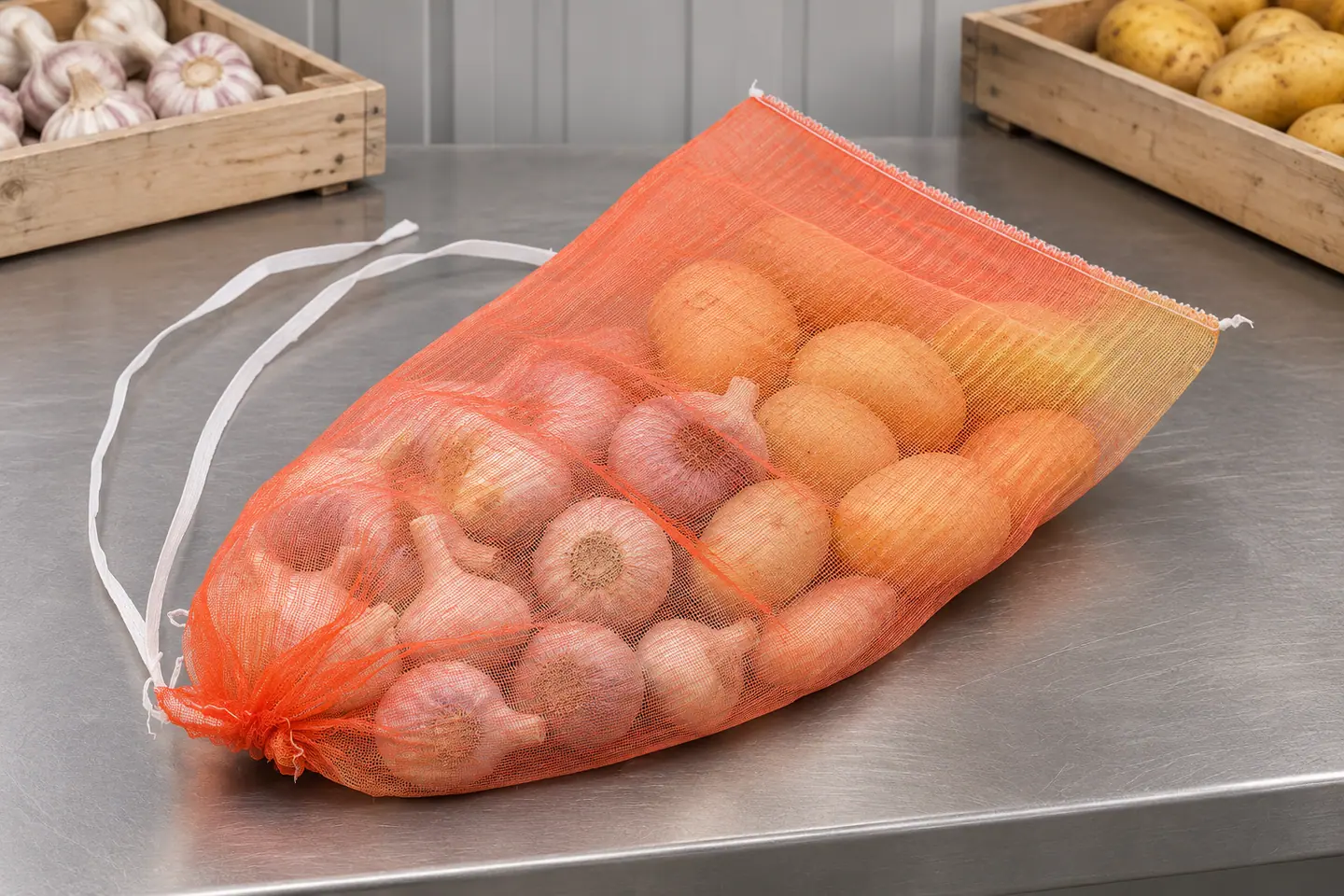
Check the net body, base seam and mouth separately. Keep a few escaped pieces and note which part of the pack let them out during normal handling.
Test the most relevant grade and packing weight.
Use the result to rule out unmatched models before requesting a production quote.
Lay one example of the smallest grade against a measured loaded opening. Separately record spillage at the gathered mouth, where the largest opening may be unrelated to the body mesh.
Compare catalog candidates
| Catalog candidate | What the description shows | What to confirm for your order |
|---|---|---|
| Small PP Drawstring Mesh Bags for Garlic, Peanuts and Fruit in Custom Sizes | Compact 15 × 25, 20 × 30 and 25 × 35 cm plus a custom option | The listing's thickness options are not an aperture measurement; request the stretched opening |
| Small PP Mesh Drawstring Net Bags for Fresh Fruit, Potatoes, Garlic, Onions and Firewood | Compact drawstring tubular mesh with custom options | Compare base and closure gaps after filling |
| Colored Tubular PP Drawstring Mesh Net Bags for Garlic, Onions and Potatoes | Several size codes include a suffix and the bag uses a drawstring | Ask for the dimensions below the tie and what that suffix describes |
Technical reference University of Minnesota postharvest guidance
Net Formation and Final Mouth Finish
Bag conversion can preserve a tube or use an edge seam. The gathering point, base and body may all have different effective openings. Compare one example of the smallest grade with the loaded body mesh, then check whether gaps remain at the tied neck or base after approved handling.
Technical background Agricultural and packaging net construction
Small PP Drawstring Mesh Bags for Garlic, Peanuts and Fruit in Custom Sizes
Wholesale Mesh Bags for 5 kg Onions and 10 kg PotatoesMesh formation sets the opening pattern, while cutting and closure assembly sets local retention near the neck. A net pattern cannot predict a loose gather by itself.
Request a material and drawstring drawing with the relevant inspection points marked.
Mesh openings under the filled load
A flat mesh sample can open further when stretched around the produce. Compare openings along the side and near the closed ends of a filled pack.
- Observe what the filled body does to the openingsThe geometry changes when mesh rests on produce or stretches. Check the widest openings on the filled sample in addition to the unloaded body.
- Acceptance recordRecord the part of the sample and the smallest grade used at each reading.
Candidate mesh constructions
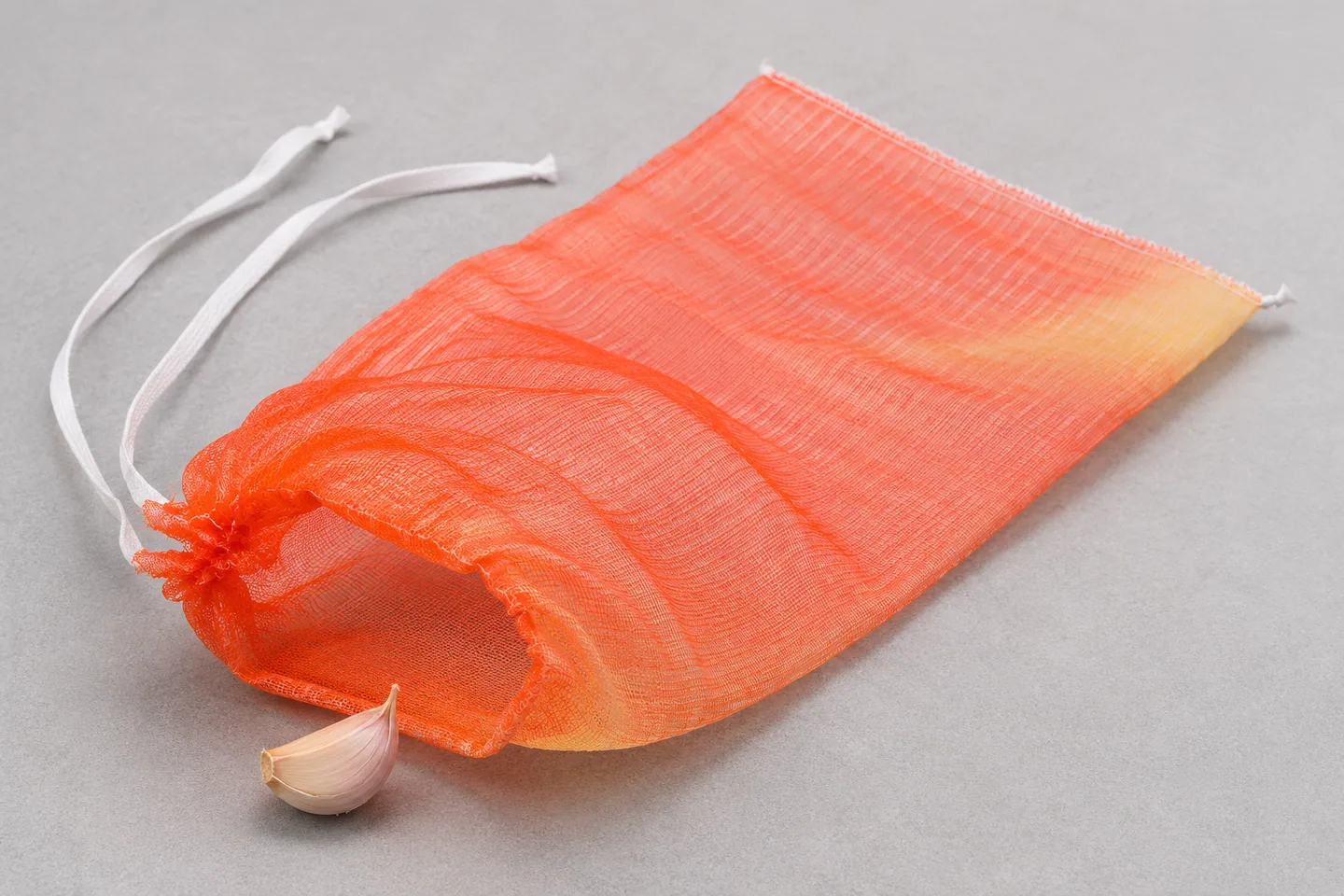
Our small drawstring bags provide a few styles for initial sampling. Ask for mesh opening and bag size tolerances on the version you plan to test.
| Technical check | Compare a finer opening with a revised neck assembly if escape occurs there. Consider visibility and the normal handling path as well as the bare opening size. |
|---|---|
| For approval | Use the same pack weight and grade in a side-by-side trial. |
A closure sized to retain the smallest pieces
Review the neck of the bag after the closure is set. Record the remaining opening and how long the operation takes with your usual produce grades.
Inspect a completed closure after the contents have settled and verify whether a persistent gap remains. Preserve any line operation your team relies on.
Keep a closure photo and your agreed retention outcome under the sample ID.
A comparison with the current bag
Use the same grade and target weight for the current and proposed mesh, and note which parts retain or release pieces during the approved handling checks.
- Make the old bag the trial controlUse your current bag and each new sample on the same grade, route and conditions. Check escapes, lateral deformation and change in closing effort.
- Acceptance recordCreate one before-and-after set for each option and sign the one you approve.
Batch specifications for recurring orders
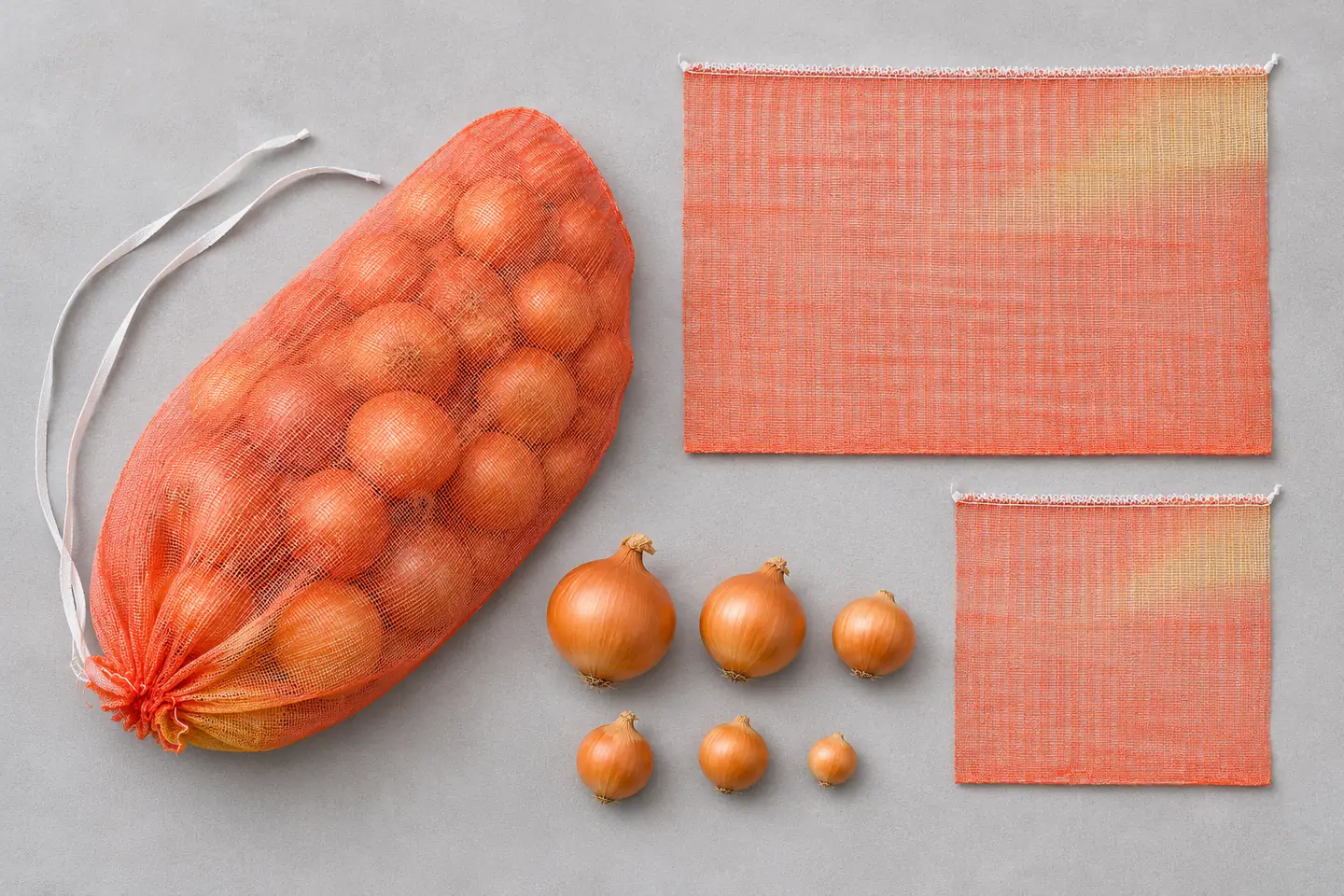
Keep the approved mesh size, cut dimensions, base and drawstring details together. Include the measurement method your receiving team will use.
| Technical check | Keep body opening, net length, closure components and color references alongside the lot identification. Ask which dimensions are checked on the packed roll or bundle. |
|---|---|
| For approval | Record an accepted inspection method and which pack sizes it covers. |
The rounded mouth after a final pull
Look at how the gathered mesh meets the string. Check whether the closure is stable enough for the approved packing route and mark any loose corners.
- Document the round at the mouthView the neck squarely after final closure. The finished opening may differ from how it looks when tightened on an empty net.
- Acceptance recordLink the mouth photo to the measured filled pack and its net weight.
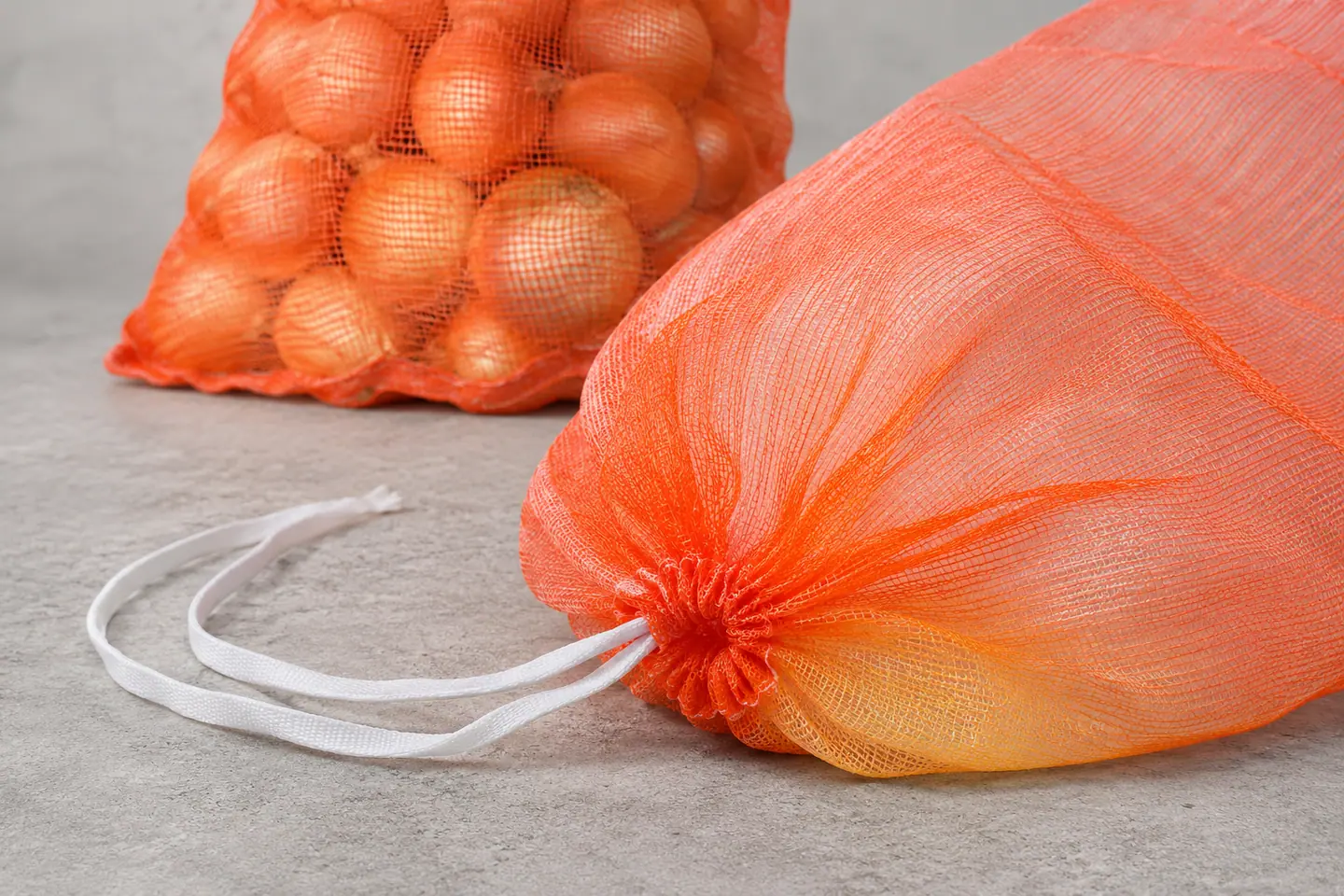
Fine-mesh samples for your smallest grade
Send the minimum produce size, target weight and current net, plus photos that show where pieces escape. Ask us for mesh and closing samples that you can compare side by side.
Send the variety and grade distribution, fill mass, number of bags and preferred closure artwork or color. Include the current bag dimensions.
Ask for two candidates that can be compared on the same grade and line.
Contact and Quote Details
Send your specification or a reference sample and include the order quantity and destination. Use the inquiry form to start your request. Send drawings or sample photos by email.
- Contact the Qingdao teamTell us what you pack or protect, and identify the operating condition that makes or breaks your purchase. Put the reference sample or drawing number in the message subject so it stays with the order.
- What the factory can reviewAttach the necessary evidence and ask for a sample, drawing review or quotation as the first deliverable.
Junfeng Road, Qingdao, Shandong, China
- [email protected]
- +1 404 203 0971
- Phone
- +86 18506421208
Continue your review
Compare this guide’s equipment, material and sample checks with your requirements.
Prepare the quote, sample count, artwork decision and delivery information on one request.
Include a drawing or current bag reference, what you pack, the equipment, quantity and delivery destination.