Dunnage Air Bags for Measured Gaps Between Pallet Rows
When a pallet-row gap needs an air bag, start with the narrowest and widest measured gap, usable contact height and the valve on your inflator. Ask for the exact rectangular model data and send it to the person responsible for the cargo-securing plan. Keep the catalog pressure field out of the operating instructions.
Before requesting a sample
- The starting specificationMeasure the gap at several usable points and heights, and mark it on the loading sketch. Account for pallets or cargo faces that are not parallel.
- Inputs for your first reviewProvide minimum and maximum gap, face height and recipient review requirements.
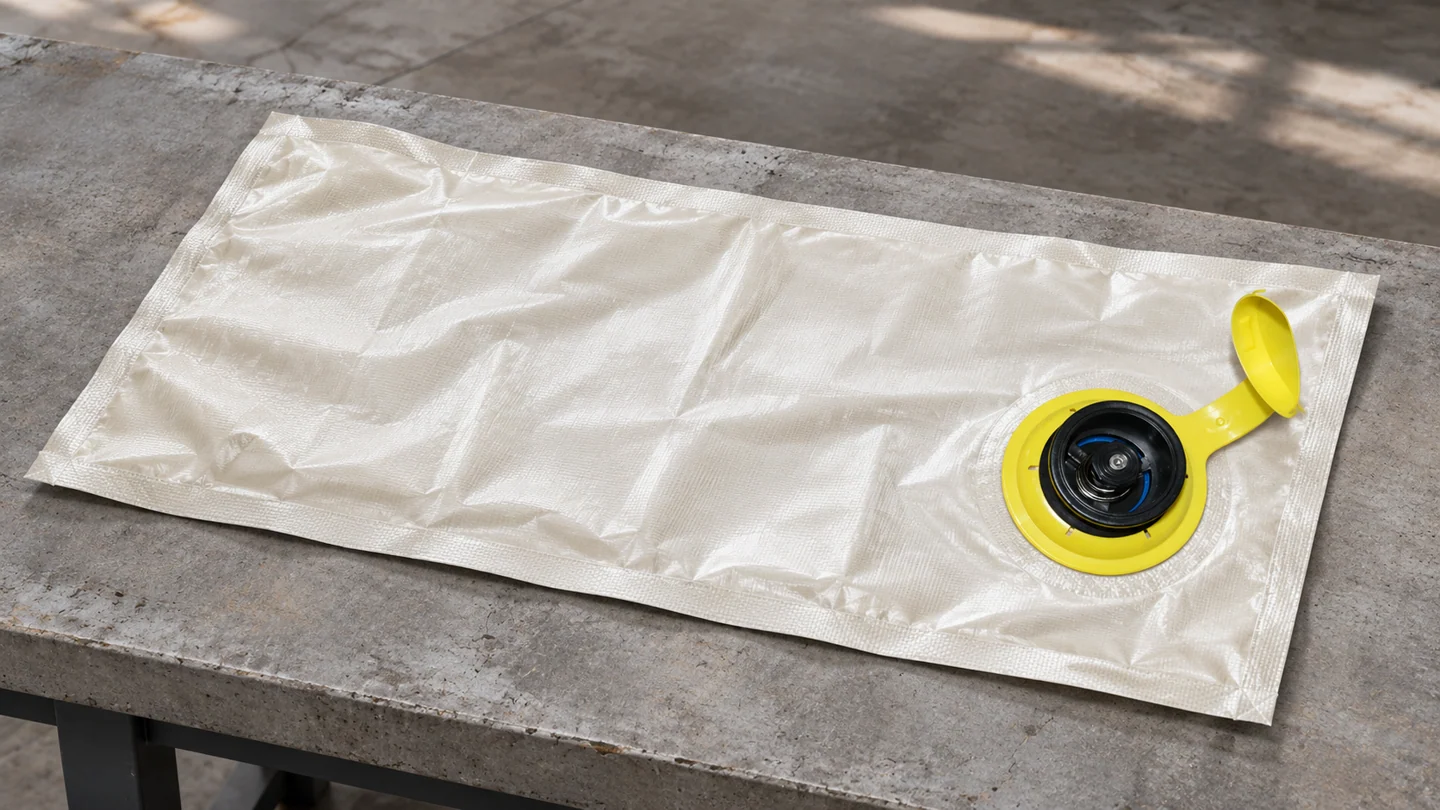
The pallet gap on a marked loading plan
Qingdao Novapack Packaging Co., Ltd. supplies these catalog options. Send your specifications so we can identify the construction, sample details and records you need for the quoted product.
Measure the narrow and wide points at the planned position. Record the contact height and surfaces on both sides and attach the drawing to the enquiry.
Account for pallets or cargo faces that are not parallel.
Use the result to rule out unmatched models before requesting a production quote.
Record the narrowest and widest pallet gap plus usable contact height. Use the packing team's load plan and the applicable model data to evaluate any working pressure.
Compare catalog candidates
| Catalog candidate | What the description shows | What to confirm for your order |
|---|---|---|
| Reusable Rectangular Dunnage Air Bag for Container Cargo Void Fill – Small or Atmospheric Valve | Rectangular catalog air bag with small or atmospheric valve options | Ask for actual model drawing, valve mating details and operating limits |
| Inflatable PP Woven Dunnage Air Bag for Container Shipping – Rectangular, Two Valve Options | Woven PP rectangular candidate with two valve options | Request compatible inflator connection and model-specific pressure documentation |
| Rectangular PP Woven Air Dunnage Bag for Shipping Container Loads | Woven rectangular container option | Confirm contact area and gap range with the cargo planner |
Technical reference IMO cargo packing and securing guidance
Woven Outer Shell and Valve Assembly
The outer shell, inner air-holding layer and valve work as one assembly. Use the exact model drawing to review seams, contact area and valve compatibility. The load planner needs model-specific limits and the packing geometry in the same file before approving the selected application.
Technical background Cargo packing and securing guidance
Reusable Rectangular Dunnage Air Bag for Container Cargo Void Fill – Small or Atmospheric Valve
Hand and Machine Stretch Film for Puncture-Prone PalletsA woven shell, inner bladder and valve form an assembly. Ask for the exact size, valve and intended use evidence rather than transferring performance from an image of a similar bag.
Request a matching sample, marking and valve data for reviewer sign-off.
The valve that fits your inflator
We have listings with two valve options. Request the exact valve reference and a picture of the connection. Give us the inflator model your team uses.
- Record the inflator and connectionConfirm the existing equipment, adapter or connector with the fit sample. The documented model governs compatibility more reliably than a generic inflator description.
- Acceptance recordKeep connection identification and the approved equipment with the trial plan.
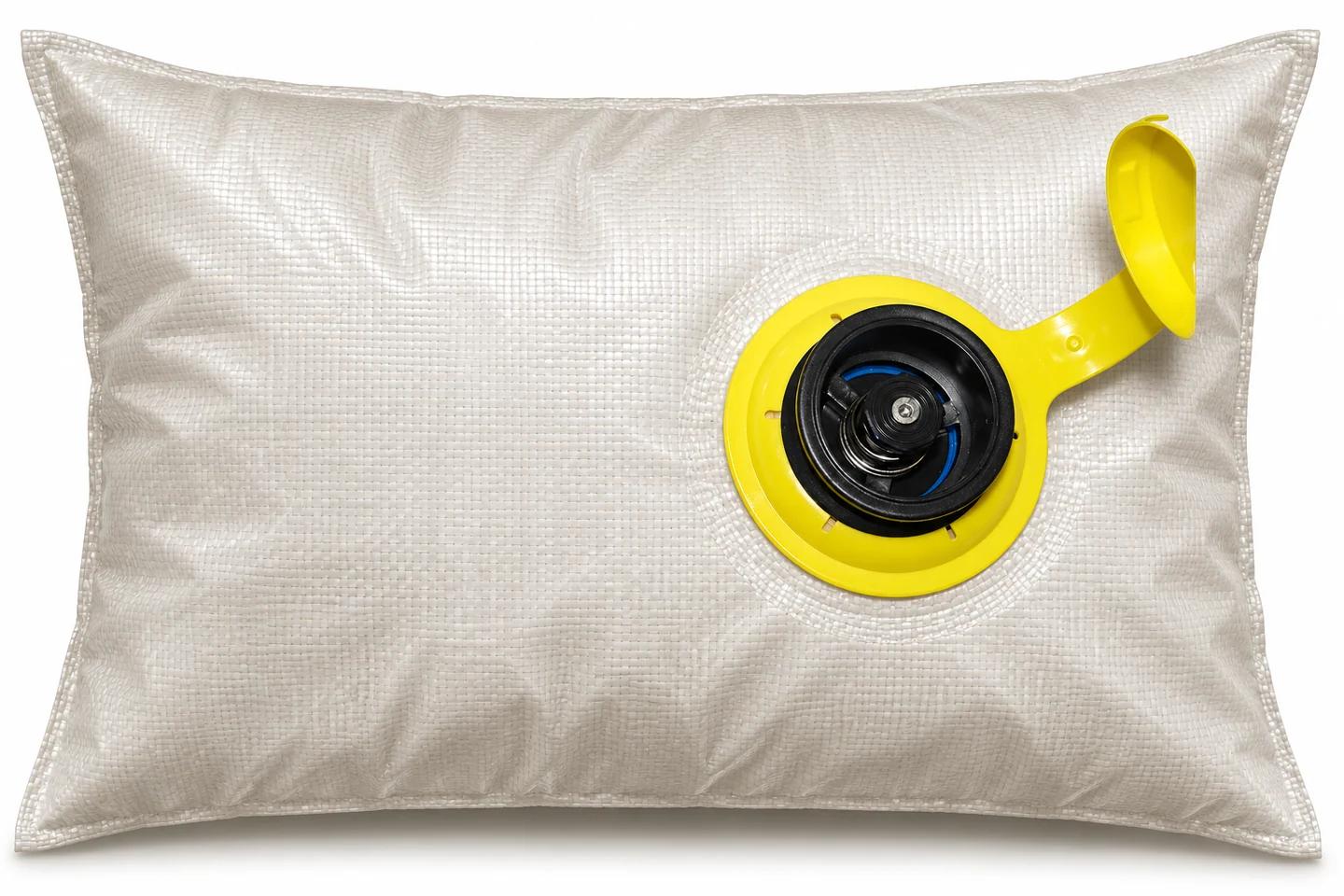
The contact faces on both sides
Record the surfaces that will face the bag. Highlight protrusions, open pallet edges or irregular block faces for the person reviewing the securing plan.
| Technical check | Describe the surfaces on both sides, including protrusions, incomplete contact and sharp edges. Ask the responsible load planner to evaluate the real arrangement. |
|---|---|
| For approval | Attach photos and the dimensions of useful support, not just pallet centers. |
A model specification for the reviewer
Ask for model, dimensions, valve, applicable use conditions and test basis. Have the load planner match those details with the actual cargo and route.
Use drawings and intended gap limits from the supplier for the exact selected model and load restraint method. Leave suitability to the responsible reviewer.
Request any model-specific approvals needed for the shipment and file the sign-off.
A visual inspection of the empty bag
Look at the face, seams and valve on the trial sample. Keep its identifier with the specification and ask your team to document the approved checks.
- Inspect an uninflated sampleCheck the folds, edges, valve body and markings. Record where the seams and valve will sit relative to the intended position.
- Acceptance recordHold a sample with damage or ambiguous identification for review.
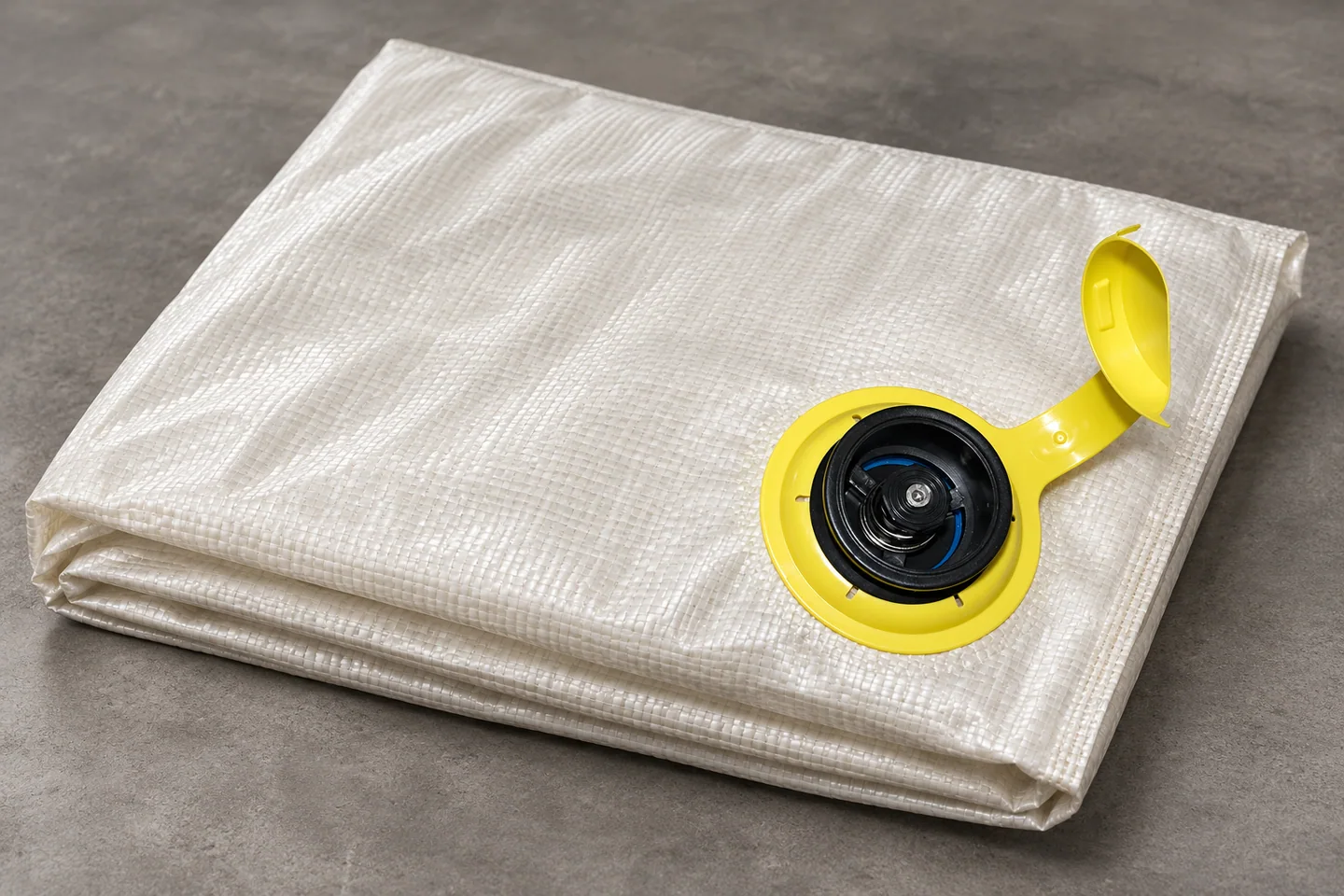
An approved loading trial
Ask the responsible team to approve the load plan, test location and method. Keep the trial observations and model reference in the shipment file.
| Technical check | Have competent personnel approve contact geometry, equipment and use conditions before trying the selected model. Include a documented release decision. |
|---|---|
| For approval | Keep the container plan, exact model, observation points and trial record together. |
Measurement on site
Take photos of the representative gap and contact faces. Use the planned orientation and include the case where the gap varies across the pallet rows.
- Measure changes during loadingRepeat measurements when the row is in its actual loaded position, not just when laid out empty. Note the points where gap minimum and maximum occur.
- Acceptance recordTie the observations to the location ID on the plan.
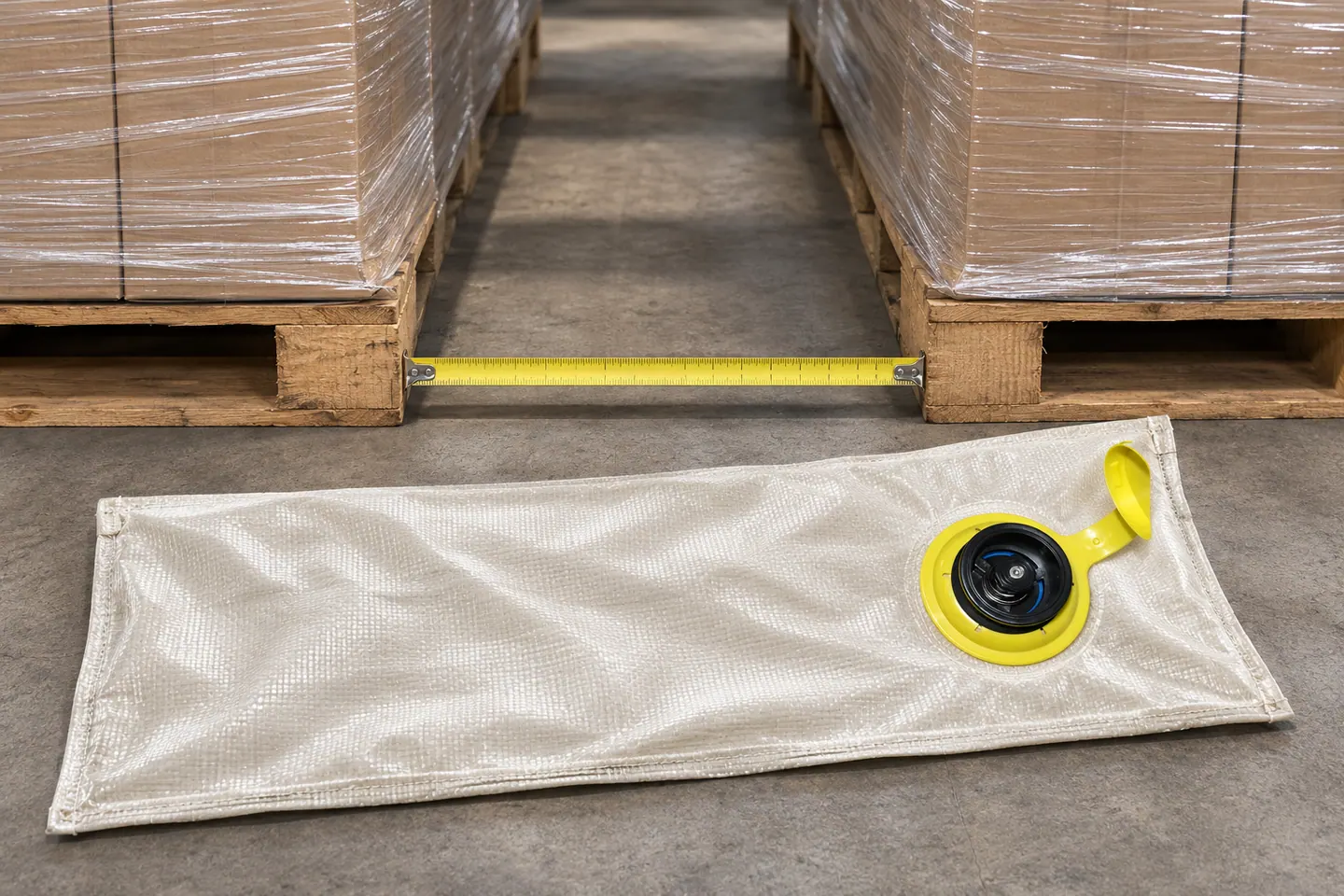
A dunnage quote with exact measurements
Send the gap range, cargo dimensions, route, inflator model and loading plan. Include the bag and valve specifications your team expects to receive.
Tell us transport method, gap range, usable faces, inflator and quantity. Identify the evidence required by your load planner.
Ask for a size shortlist, valve sample and relevant use documentation.
Contact and Quote Details
Send your specification or a reference sample and include the order quantity and destination. Use the inquiry form to start your request. Send drawings or sample photos by email.
- Contact the Qingdao teamTell us what you pack or protect, and identify the operating condition that makes or breaks your purchase. Put the reference sample or drawing number in the message subject so it stays with the order.
- What the factory can reviewAttach the necessary evidence and ask for a sample, drawing review or quotation as the first deliverable.
Junfeng Road, Qingdao, Shandong, China
- [email protected]
- +1 404 203 0971
- Phone
- +86 18506421208
Continue your review
Compare this guide’s equipment, material and sample checks with your requirements.
Prepare the quote, sample count, artwork decision and delivery information on one request.
Include a drawing or current bag reference, what you pack, the equipment, quantity and delivery destination.