
Fully Belted Soft Pallet Slings for Stacks of Bagged Cement
Moving a stack of bagged cement requires a cradle whose continuous belts and base support your actual load. Several catalog listings call out fully belted loops but also show spout options. Send the layer pattern, stack mass and lifting hardware. Request an open-cradle drawing and have the lifting team approve the configuration.
Before requesting a sample
- The starting specificationMeasure the loaded cement stack at its widest point, including pallet or support details if relevant. Confirm how the soft pallet leaves the ground in the intended arrangement.
- Inputs for your first reviewSend actual stack dimensions, weight and the handling sketch.
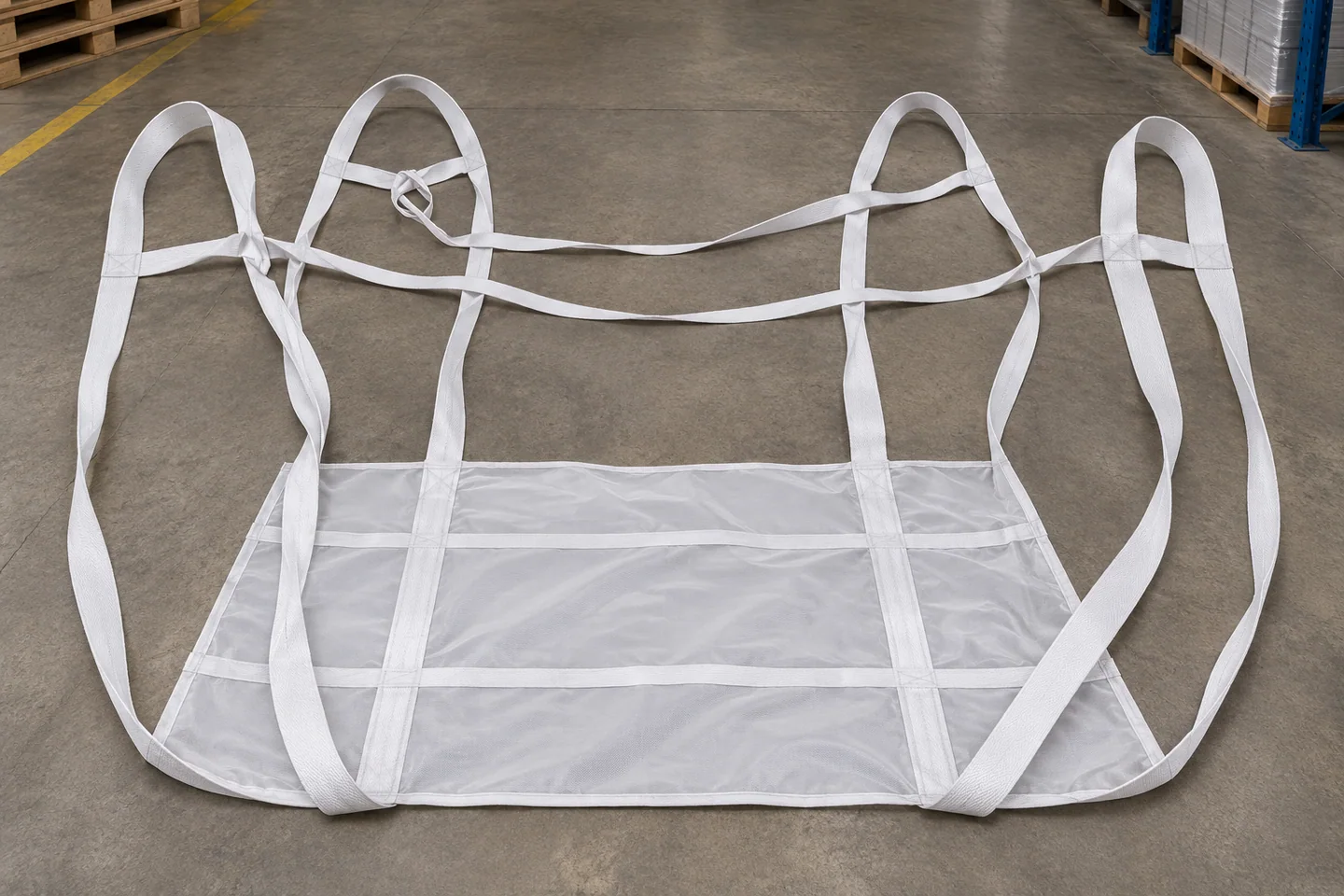
A cradle for an entire stack
Qingdao Novapack Packaging Co., Ltd. supplies these catalog options. Send your specifications so we can identify the construction, sample details and records you need for the quoted product.
Use an open cradle reference where the material is already bagged. Show how the stack will rest on the sling in the proposed design, including the base contact area.
Confirm how the soft pallet leaves the ground in the intended arrangement.
Use the result to rule out unmatched models before requesting a production quote.
Give drawings of the stack and lifting points. State number of sacks per layer, total mass, base contact and any edge protection, then have the lifting team review the exact design.
Compare catalog candidates
| Catalog candidate | What the description shows | What to confirm for your order |
|---|---|---|
| Industrial PP Woven Pallet Sling Bag with Fully Belted Lift Loops | Fully belted PP sling listing with four loops, also showing a fill-spout field | Obtain an actual open-cradle drawing for an entire bagged stack |
| Woven PP Pallet Sling Bulk Bag for Cement and Rice – 1 to 2 Tonne, 4 Fully Belted Loops | Fully belted loops listed for cement and rice | Confirm format and record scope before assigning it to a stacked load |
| Soft-Bottom Pallet Tray Sling Bag with Four Belted Loops and Spouts | Tray sling reference whose listing mentions spouts | Ask for a continuous belt path under the stack and the intended loading orientation |
Technical reference FIBCA safe-handling guidance
Continuous Belt Path and Cradle Sewing
Cradle construction depends on where webbing runs under the load and how it joins the support fabric. Ask for a drawing that shows the path and attachment points beneath the stack, including any concentrated edge contacts. Identify the exact product basket or sling class and use the lifting team’s acceptance records for it.
Technical background PP tape for woven packaging and FIBC fabric
Show where the webbing passes under and around the stack and where it joins the sewn base. The rated assembly and attachment positions should match the intended lift.
Ask for the belt-path drawing, applicable evidence and exact model ID.
Stack dimensions on the ground
Record the number of cement bags by layer and the total dimensions and mass. Keep the stack resting on a supported level surface while measurements are taken.
- Measure the stack at the bottom and topUneven bag placement or compressed layers can change the actual stack footprint. Capture length, width and height from the same stack intended for the approved trial.
- Acceptance recordKeep layer count, dimensions and net mass on the load sketch.
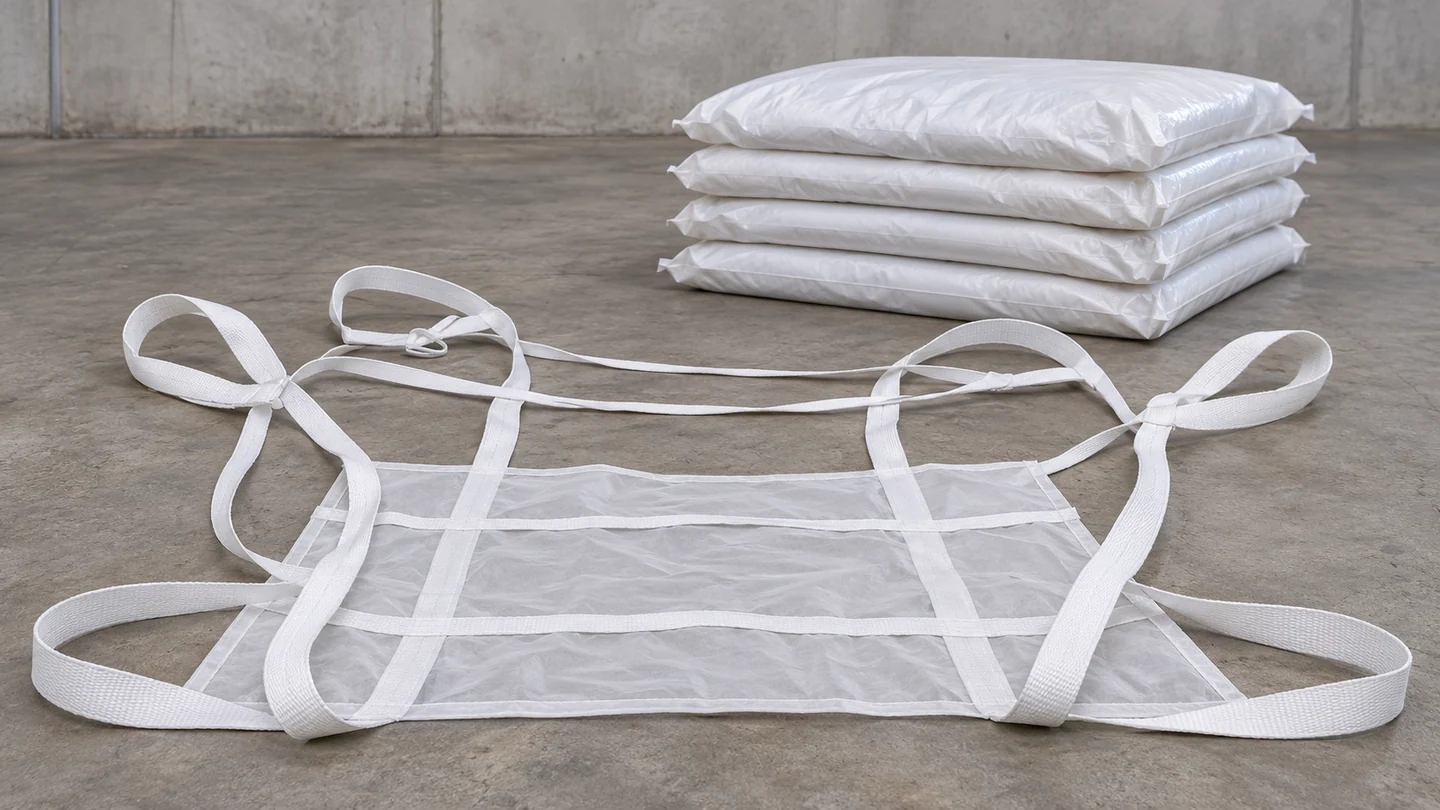
Lifting equipment and rated configuration
Share the hook or spreader drawing. Request records for the sling construction and have the proposed arrangement evaluated by the responsible lifting team.
| Technical check | Compare opening, reach and approved attachments to the rated configuration. Ask the site handling team to review which hardware and connection are in scope. |
|---|---|
| For approval | File that approval separately from pallet dimensions and shipment fit. |
Stability and clearance at transfer points
Give the reviewer the route, face orientation and any point where the stack moves from one support to another. Include clearance limits and the stack condition expected at the transfer.
Record actual clearances, receiving conditions and any change of handling equipment. The easiest access point alone cannot establish stability through the route.
Mark transfer pinch points on the approved site plan and attach to the sample brief.
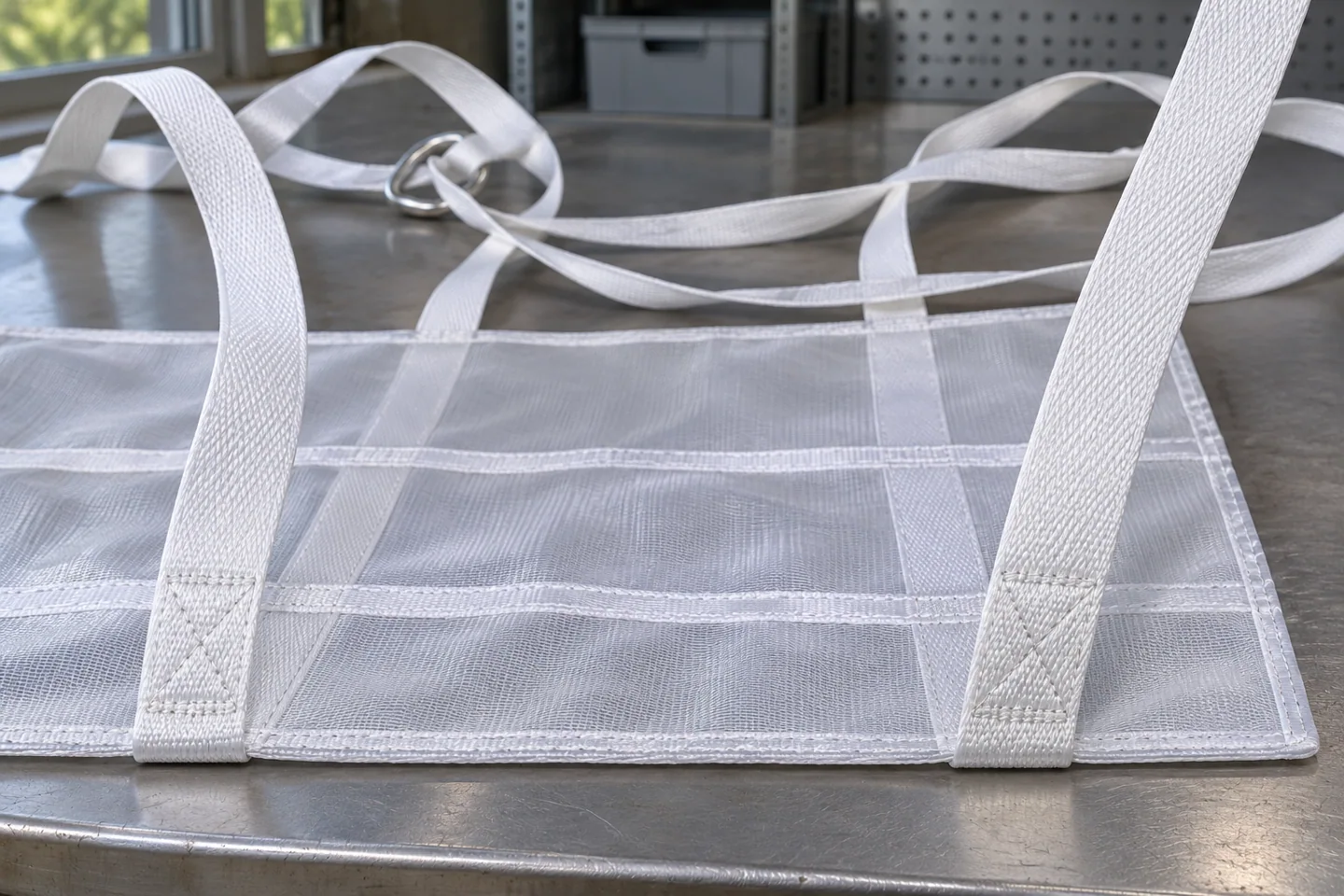
The webbing and base attachment
Compare base coverage and where the webbing meets the fabric. Ask for details that tie your sample to the approved manufacturing drawing.
- Inspect seams where belts meet the baseUse the empty sample to identify straps, stitches and edges covered by the stack in use. Record the places where positional differences would matter.
- Acceptance recordTake close-up approval photos and match the visible belt path to the drawing.
An approved sample plan
Once the design and handling plan are approved for the trial, record the setup and acceptance criteria. Keep the sample references with the lifting and inspection documents.
| Technical check | Have the responsible personnel approve the exact rated assembly, equipment, loads and stop conditions. Capture the fit, clearance and condition observations under that plan. |
|---|---|
| For approval | Use the exact sling code and model revision on the trial sheet. |
A footprint review before loading
Lay out the available support area and compare it with the stack dimensions on the drawing. Record which pallet, platform or loading point is used for the review.
- Compare stack overhang before loadingLay out the cradle and inspect how it relates to the stack footprint. A poor match that is obvious on the ground is a reason to revise before a loaded trial.
- Acceptance recordMark the greatest footprint in both axes and identify any pinch location.
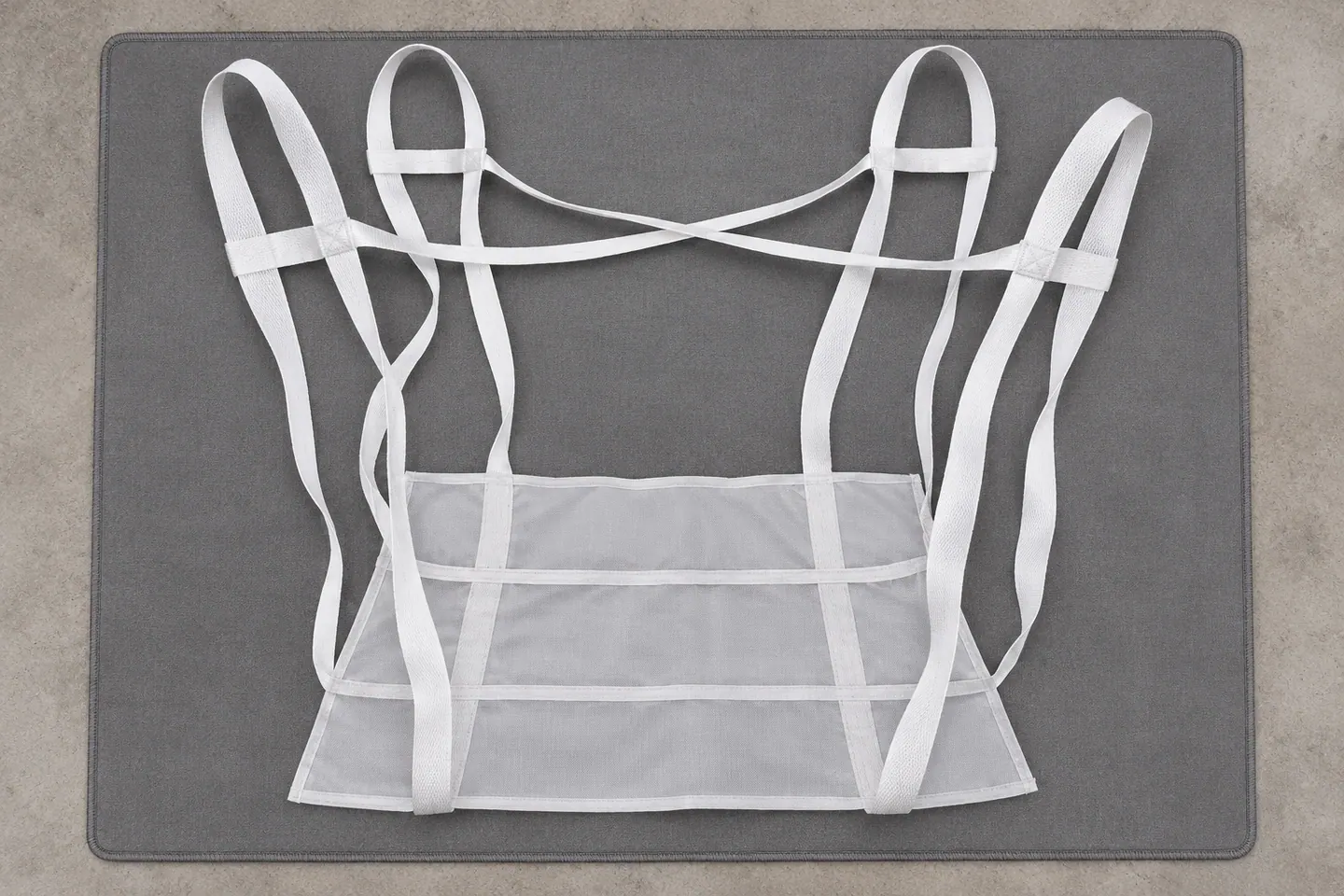
A belted sling drawing request
Send the stack weight, layer pattern, dimensions, handling equipment and current support arrangement. Include the documentation needed for site approval.
Include stack sketches, transfer points, hardware, quantity and destination. Indicate evidence and marking the receiving team needs.
Ask for an exact construction drawing and rated-use review before selecting a sample.
Contact and Quote Details
Send your specification or a reference sample and include the order quantity and destination. Use the inquiry form to start your request. Send drawings or sample photos by email.
- Contact the Qingdao teamTell us what you pack or protect, and identify the operating condition that makes or breaks your purchase. Put the reference sample or drawing number in the message subject so it stays with the order.
- What the factory can reviewAttach the necessary evidence and ask for a sample, drawing review or quotation as the first deliverable.
Junfeng Road, Qingdao, Shandong, China
- [email protected]
- +1 404 203 0971
- Phone
- +86 18506421208
Continue your review
Compare this guide’s equipment, material and sample checks with your requirements.
Match the approved sample and drawing to the specification, lot and packing marks.
Include a drawing or current bag reference, what you pack, the equipment, quantity and delivery destination.