
Baffled Q-Bags for a Tighter Filled Pallet Footprint
If your loaded bag hangs over the pallet, compare your current FIBC with a baffled Q-bag at the same fill weight. Measure the widest point after the same settling time and check discharge residue. Confirm the loop layout on the approved drawing because one catalog entry describes it inconsistently.
Before requesting a sample
- The starting specificationInternal panels restrain changes in the filled cross-section. The value depends on whether the candidate fits your pallet or transport envelope and still discharges as required.
- Inputs for your first reviewSend current and allowable width and depth with fill weight and bulk density.
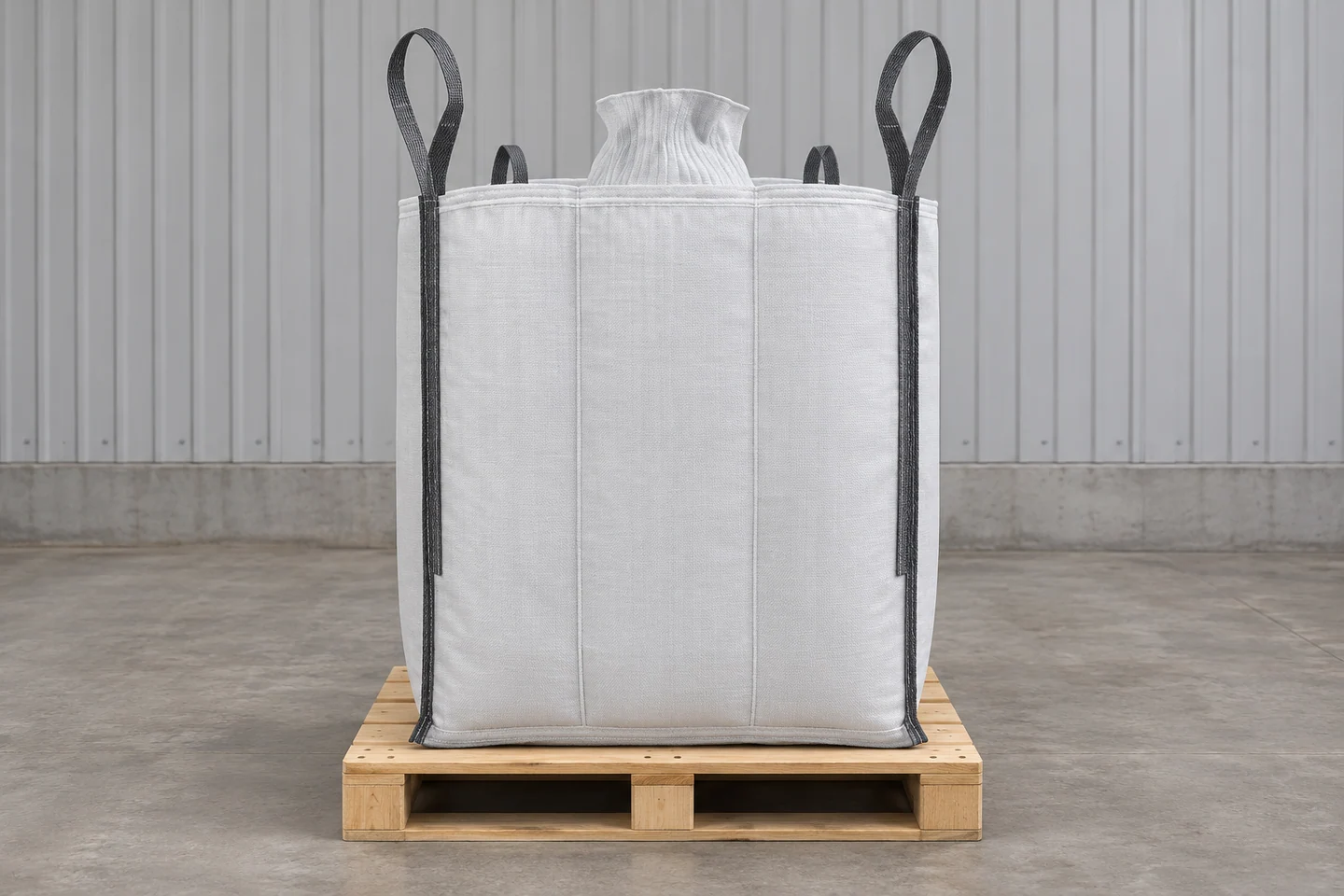
The relationship between baffles and bag shape
Qingdao Novapack Packaging Co., Ltd. manufactures woven polypropylene FIBCs in Qingdao, China. Tell us how you will fill and handle this bag so we can review the drawing, components and the checks you need on the selected build.
Internal fabric panels tie sections of the bag body together. Ask for the actual panel layout and openings, then look at what happens when your own material fills the corners.
The value depends on whether the candidate fits your pallet or transport envelope and still discharges as required.
Use the result to rule out unmatched models before requesting a production quote.
Record width at the pallet deck and at the widest filled point. For a centered bag, compare overhang on each side individually; shifting the bag can move the worst point.
Compare catalog candidates
| Catalog candidate | What the description shows | What to confirm for your order |
|---|---|---|
| PP Q-Bag Baffle Bulk FIBC with Top Fill and Bottom Discharge Spouts | Baffled Q-bag with fill and discharge spouts; catalog loop fields differ | Use the signed loop drawing and the exact sample label |
| PP Q-Bag Baffle FIBC with Fill and Discharge Spouts | Second dual-spout baffled construction | Compare internal openings and discharge residue at equal fill mass |
| White U-Shaped Woven PP Baffle Bulk Bag for Transport Packing | Flat-bottom baffled candidate | Compare the footprint only where a flat-base unloading method is suitable |
Technical reference ISO 21898 for non-dangerous goods
Baffle Panels and Flow Openings
Cut internal panels tie opposing parts of the bag body together. Their stitched attachment points help define the filled profile, and their openings allow material to reach the corners. Ask for the internal layout and check both shape and residue. A neat outline on an empty sample cannot show how your pellets will move.
Technical background PP tape for woven packaging and FIBC fabric
PP Q-Bag Baffle Bulk FIBC with Top Fill and Bottom Discharge Spouts
How Woven FIBC Bulk Bags Are MadeThe shape depends on baffle positions, their attachment seams and openings into the corners. Review that arrangement before choosing based on the shape of an empty bag.
Ask for an internal sketch and link its revision to the trial label.
Openings around the internal panels
The fill should distribute across the body. Request a drawing for the panel openings and ask your trial team to record slow fill areas and cleared or retained product after discharge.
- Observe filling around the cornersRecord whether material reaches the fourth corner or bridges over an internal opening with your powder or pellets. A visible flat side does not show what happened inside.
- Acceptance recordKeep observations with the fill rate and a photo of each side at the agreed test weight.
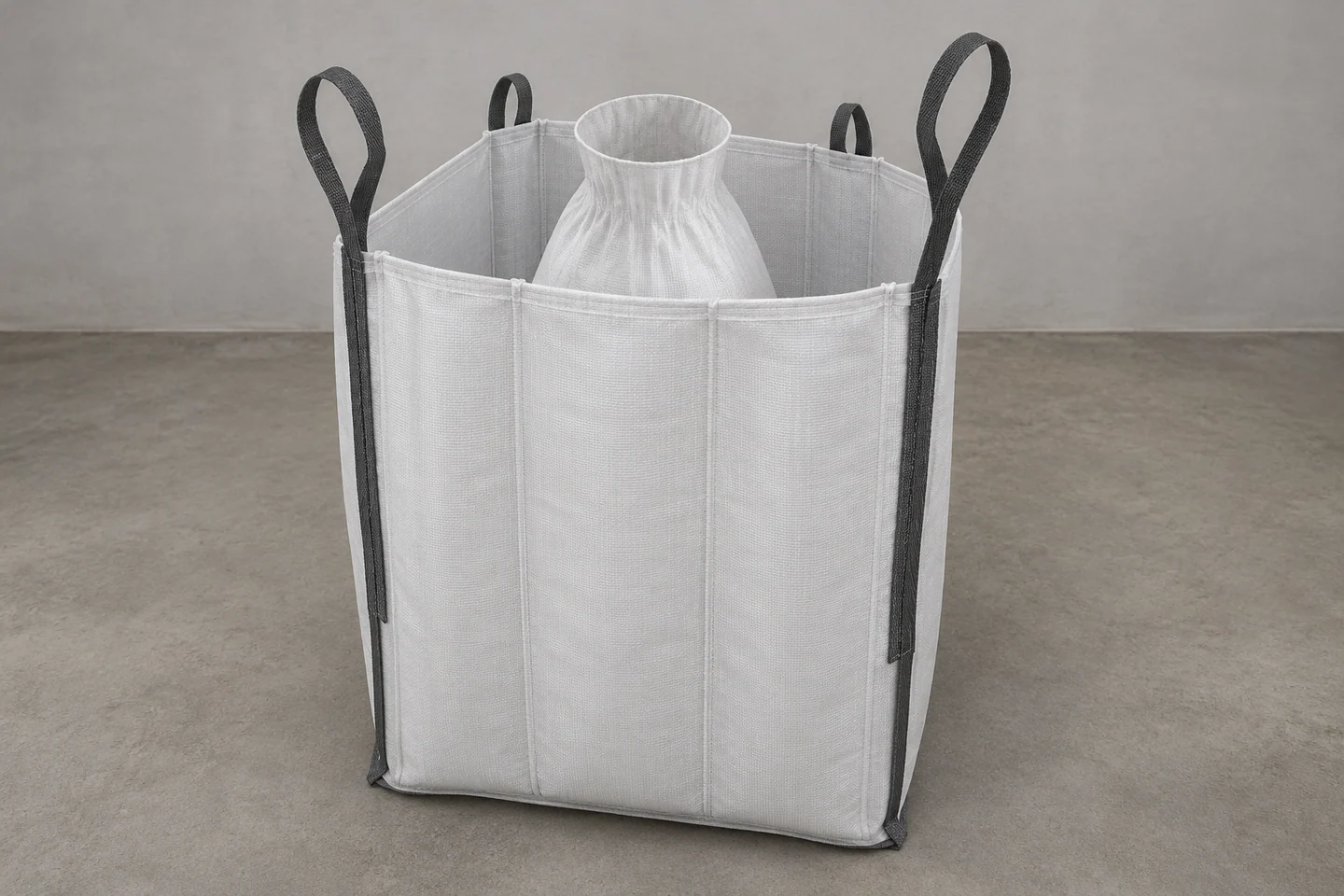
Width at the point that matters
A filled bag can reach its widest point above the pallet. Mark where the maximum occurs and compare it with rack beams, loading clearances and the container space available.
| Technical check | Compare widest points in both axes after the same settling interval. Record the tightest rack or truck clearance too, since pallet width alone may not set the limit. |
|---|---|
| For approval | Use one pallet reference, volume estimate and fixed settling interval across samples. |
Seam and loop details in the model file
Baffled bags can share a similar shape while using a different loop or seam arrangement. Ask for the drawing that corresponds to the sample label and review the lifting interface separately.
Check that the quoted loop position agrees with the signed drawing and relevant construction documentation. Retain the baffle stitch line image separately from loop images.
Resolve any inconsistency between the catalog and the sample before placing the order.
Repeat measurements after settling
Record the length, width and height at the times agreed for your trial. Use the same rest period for each candidate and include repeat bags if feasible.
- Separate shape stability from load ratingA clean outline or repeatable footprint says how a design fills. Lift rating and compatibility with the site equipment need evidence matched to the ordered build.
- Acceptance recordUse different approval checkboxes for shape, load evidence and site handling.
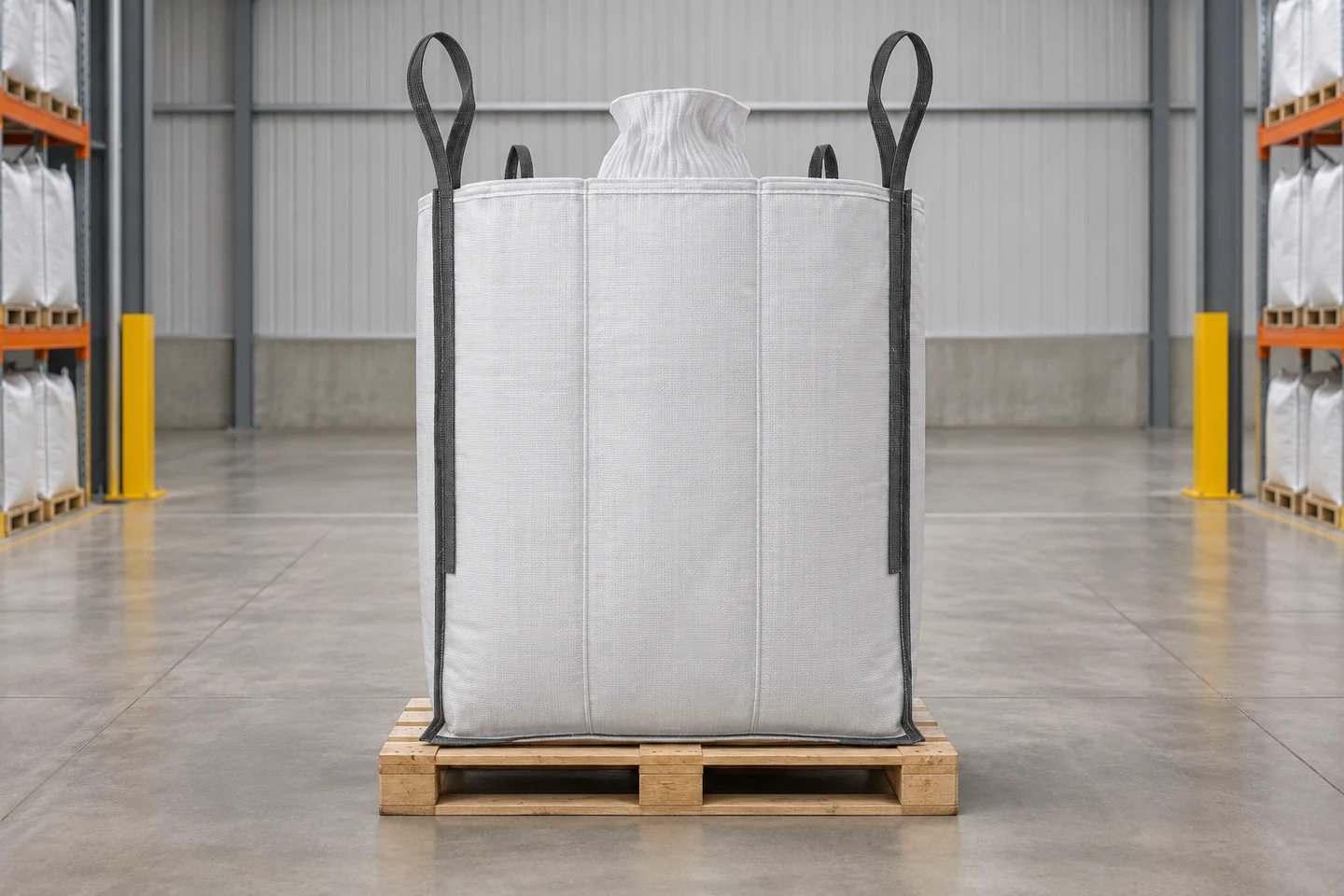
Fill and discharge efficiency
Record the fill time, the areas that look underfilled and any residual product. Keep these observations beside the pallet-fit measurements so your decision includes the whole process.
| Technical check | Record the actual discharge time and any retained material under the client's approved procedure. A narrower bag may not be a useful purchase if residence time at the hopper grows. |
|---|---|
| For approval | Review the space saving alongside discharge performance before selecting a trial winner. |
A quote for the same configuration as the trial
Ask us to carry the drawing revision, baffle layout, spouts and packing count into the quote. Save the signed trial result with the model your warehouse approved.
- Preserve the tested baffle in the orderRecord the internal panel count and placement, closures, loop positions and sample code. Any alternative should be shown explicitly for the buyer to reapprove.
- Acceptance recordApprove a revision with the trial's footprint and residue results linked.
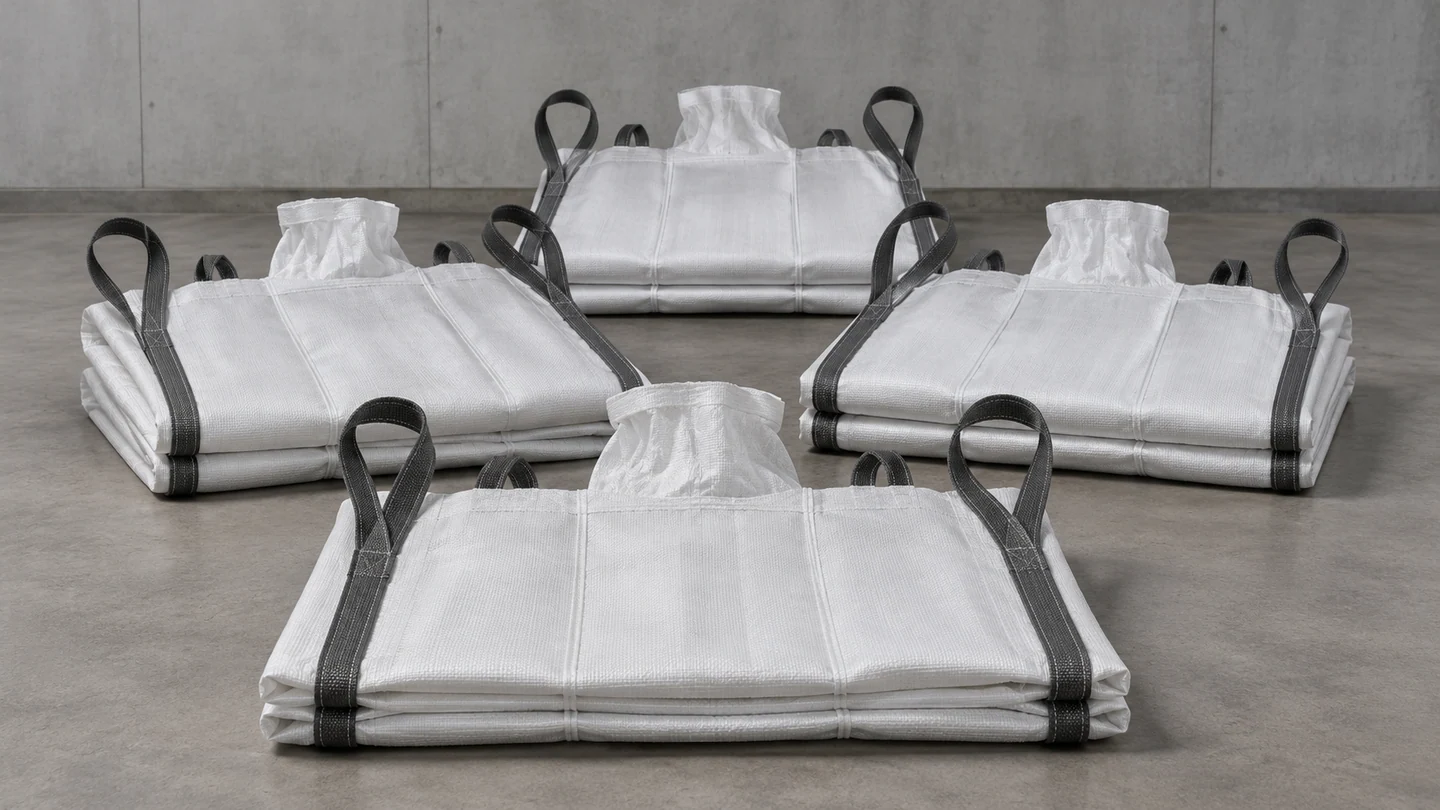
A Q-bag trial brief
Send an overhang photo, target and measured filled dimensions, current drawings, pallet size and the material. Include the discharge interface so the samples cover both fit and emptying.
Send a filled picture with a measurable reference, pallet outline, material and discharge needs. Identify the part of the route where bulge causes problems.
Ask for a standard and baffled comparison sample against the same measured limits.
Contact and Quote Details
Send your specification or a reference sample and include the order quantity and destination. Use the inquiry form to start your request. Send drawings or sample photos by email.
- Contact the Qingdao teamTell us what you pack or protect, and identify the operating condition that makes or breaks your purchase. Put the reference sample or drawing number in the message subject so it stays with the order.
- What the factory can reviewAttach the necessary evidence and ask for a sample, drawing review or quotation as the first deliverable.
Junfeng Road, Qingdao, Shandong, China
- [email protected]
- +1 404 203 0971
- Phone
- +86 18506421208
Continue your review
See where the woven body, seams, webbing and sleeves meet on the finished bag.
Match the approved sample and drawing to the specification, lot and packing marks.
Include a drawing or current bag reference, what you pack, the equipment, quantity and delivery destination.