How Woven FIBC Bulk Bags Are Made
Qingdao Novapack Packaging Co., Ltd. manufactures woven polypropylene bulk bags in Qingdao, China. A usable production specification starts with the load and equipment and ends with an identified sample. This guide shows which materials and joins define the build.
Before requesting a sample
- Follow a woven bag from material to receivingThe bag is built from woven polypropylene, sewn components and lifting webbing, with any coating or liner selected separately. The chosen geometry and assembly are visible in the approved sample.
- Inputs for your first reviewAsk to compare the exact production drawing, assembled sample and receiving checks for the design you intend to buy.
The material in a woven bulk bag
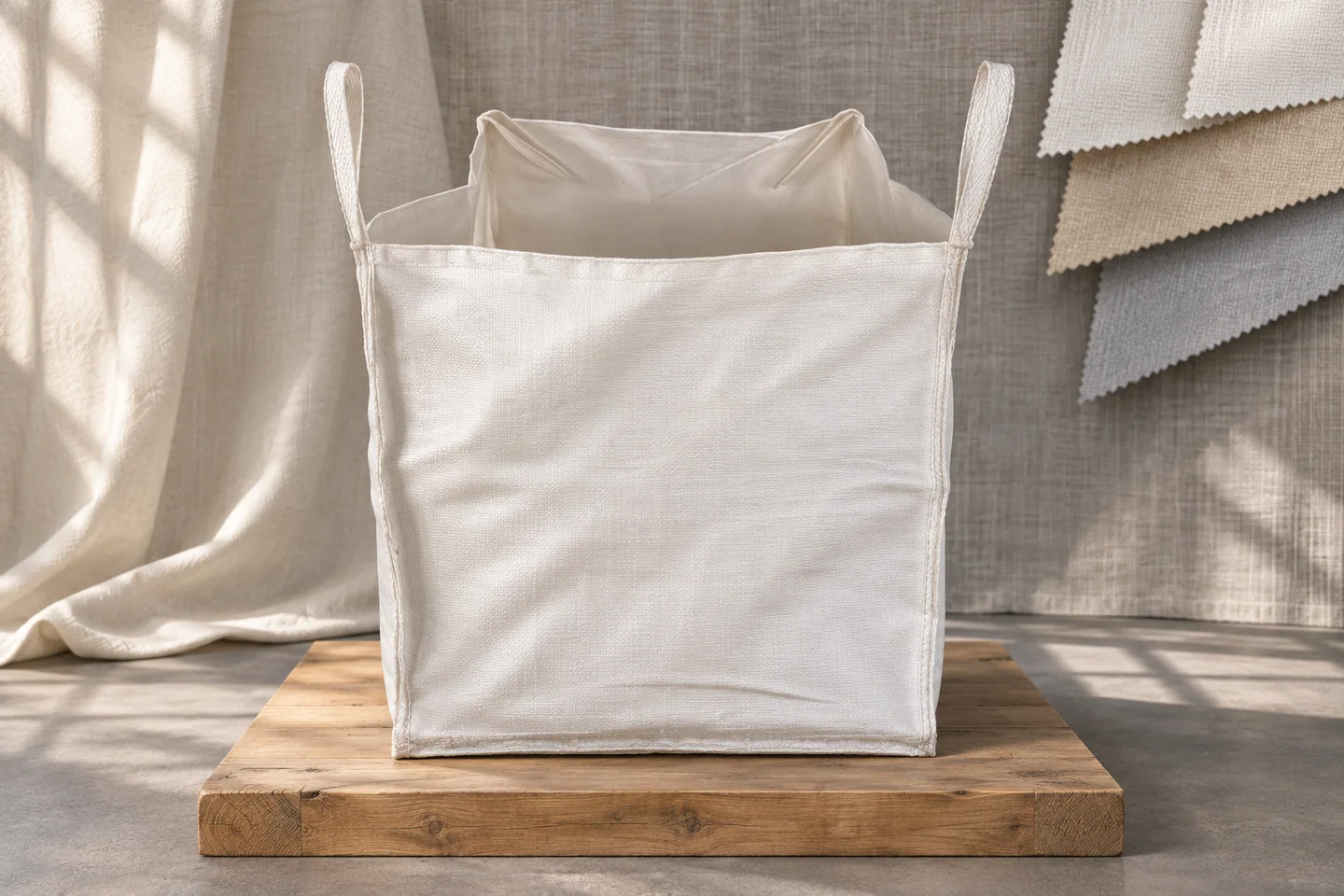
Polypropylene tape can be extruded, drawn and woven into the body fabric. When you request a material, specify fabric mass in g/m², any coating and the required resin condition. Fabric mass describes the textile on the drawing. The documented working load applies to the complete sewn design.
- PP resin and tape
Identify the resin, tape and finish on the material specification.
- Woven body fabric
Use the agreed fabric mass in g/m² and identify any applied coating.
- Finished bag
Verify load evidence for the complete construction, including body, base, loops and seams.
Fabric identity, finish and construction matter because they define part of the exact bag build. Discuss exposure, contact and leakage need so materials can be identified at approval.
Record which material attributes are requirements and which ones the factory should propose.
Catalog examples to review
See how a circular body changes where woven joins are located.
Compare the U-panel and dual-spout arrangement with the circular build.
Compare the openings, loop layouts, coated construction and other available options for your job.
The four parts that define the order
Specify body, webbing, top and bottom as separate components. Send a sketch of the fill and discharge interfaces. Add a line for the liner when the order requires one.
FIBC Manufacturing and Quality ChecksA flat drawing should show the relationship from the filling point to lower closure, body footprint and lifting points. A change in one can affect the connected equipment.
Ask to see all four areas in one approved drawing with the necessary clearances.
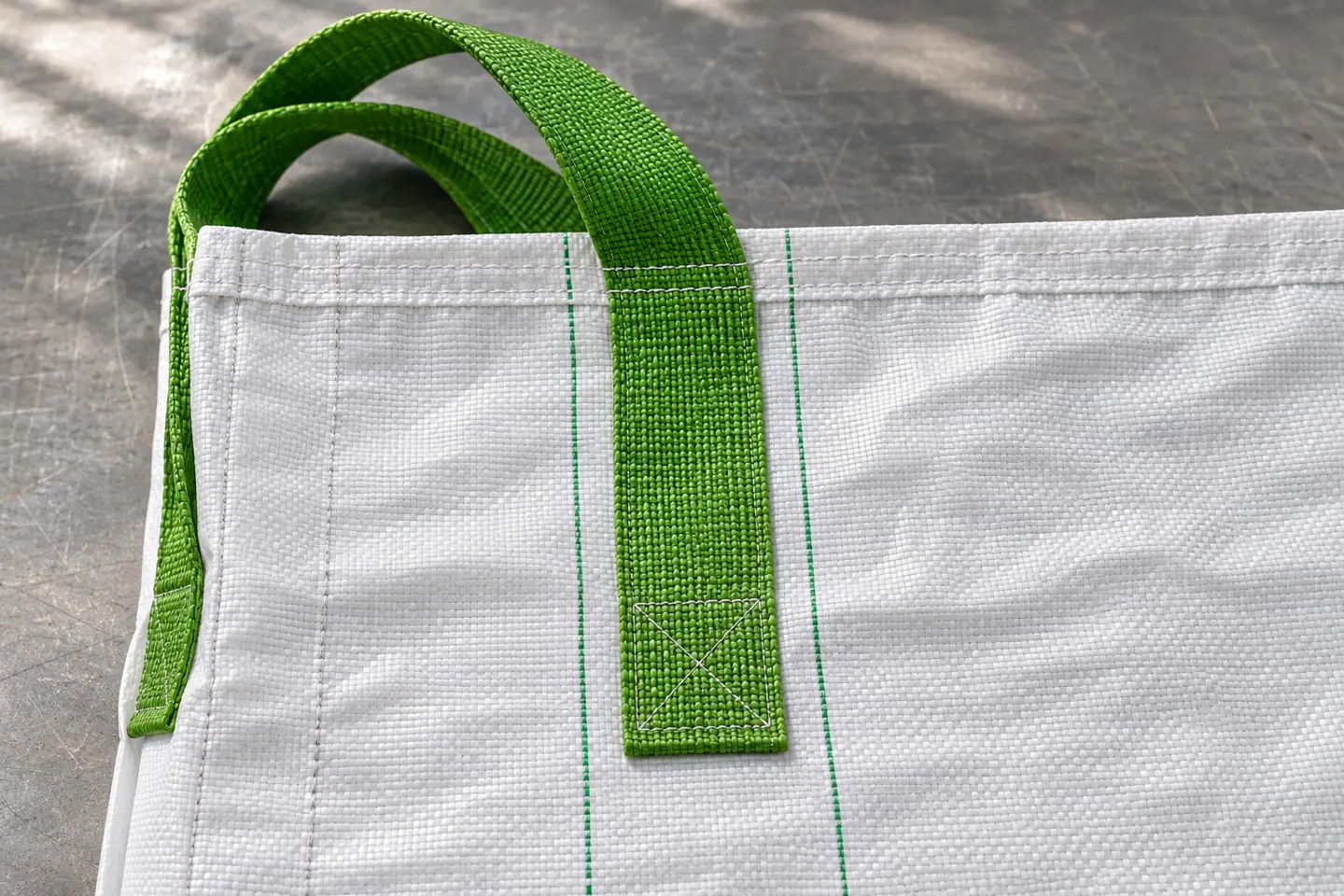
Woven fabric and webbing
The woven tape and the wider lifting webbing serve different functions. Ask us to confirm where the webbing attaches, how the seam is constructed and which drawing revision describes the finished bag.
- Inspect fabric and webbing separatelyWoven cloth forms the body and panels. Lifting webbing and stitch placement belong to a separate load-bearing assembly that should be verified with the drawing and documentation.
- Acceptance recordKeep separate material and attachment identifiers by component; compare them with the signed sample.
Panel and tubular construction
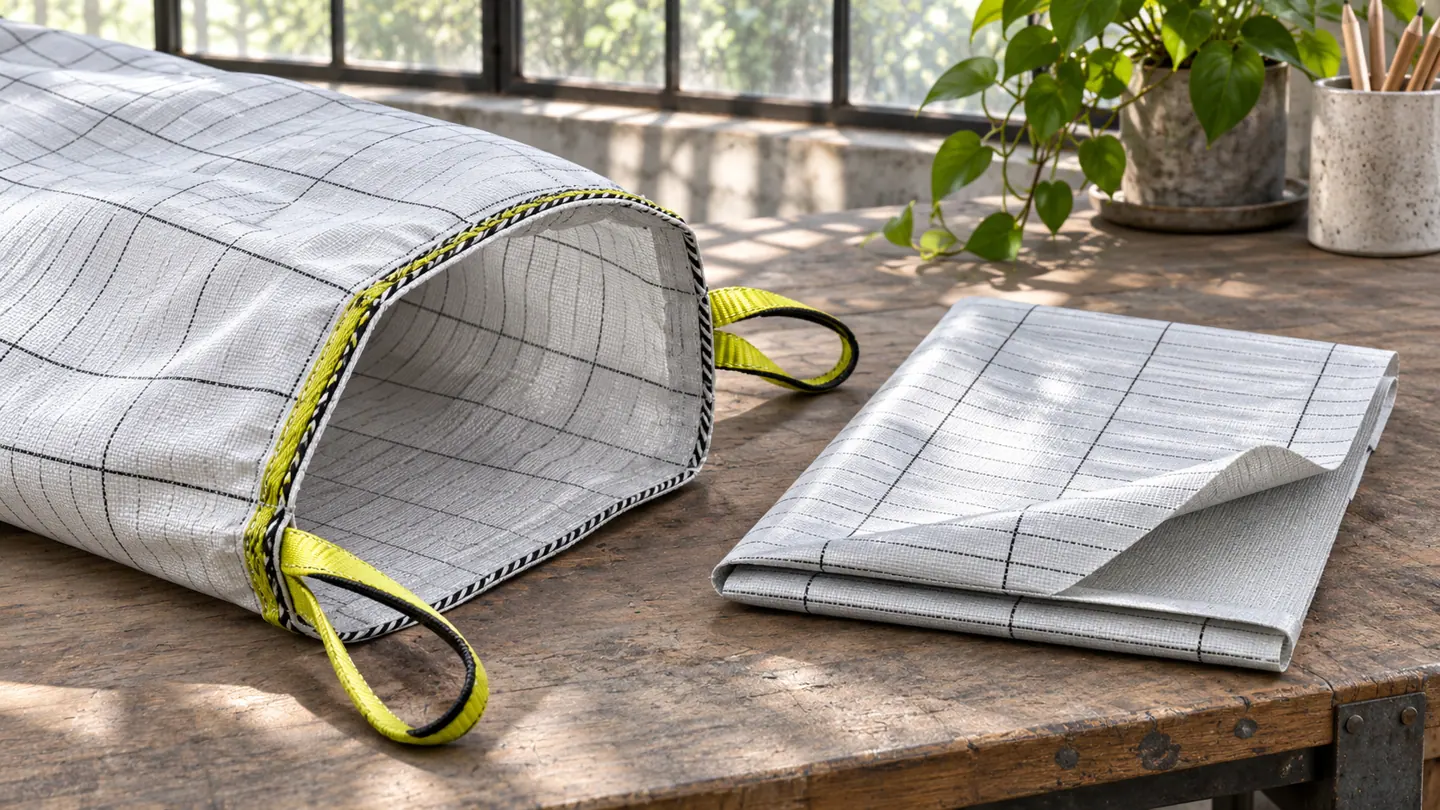
A circular body uses tubular fabric. A U-panel depends on panel dimensions and sewn joints. A baffled bag adds internal ties to shape the loaded profile. Check the filled dimensions for pallet and rack fits.
| Technical check | A panel design and a tubular body create different join locations. Compare the base seam, corner transitions and access point to match the material and handling route. |
|---|---|
| For approval | Ask for the body and base drawings and photographs of the joins on the empty sample. |
Coating and liner placement
A fabric coating follows the woven surface. A formed insert creates its own enclosure with its own necks and seals. For fine powder, identify whether fines escape at the fabric, seam, filling sleeve or discharge closure.
- Fabric face
A coating follows the woven surface. Check this area separately from seams.
- Stitched joints
Thread and needle holes create a different path. Focus on corners and overlapping seams.
- Liner and closures
A fitted liner creates another enclosure. Check its seals, folds and both closure points.
| Technical check | Coating, treated stitches and fitted liners work at different points in the assembly. Show the seam and both sleeve closures when assessing leakage or barrier requirements. |
|---|---|
| For approval | Use the same conditions and record observations independently at face, seam and closure. |
Cutting and component assembly
Pieces are prepared to the agreed construction. Confirm the panel edges and webbing location before the seam and attachment details are approved on the sample. Mark finished dimensions separately from fabric-cut dimensions.
- Cut components
The pattern sets the material pieces, opening centers and allowances.
- Assemble and sew
The sewing layout puts webbing, seams and sleeves into their approved positions.
- Measure the sample
Use the finished drawing to check the component positions and interfaces before release.
- Check cut position before sewing releaseThe cut components establish finished panel limits, opening centers and visible join positions. Inspect those positions on the sewn sample where fabric folds or turns at a corner.
- Acceptance recordSelect readable points for each measurement and note how the factory and receiving team will repeat it.
Finished opening and closure checks
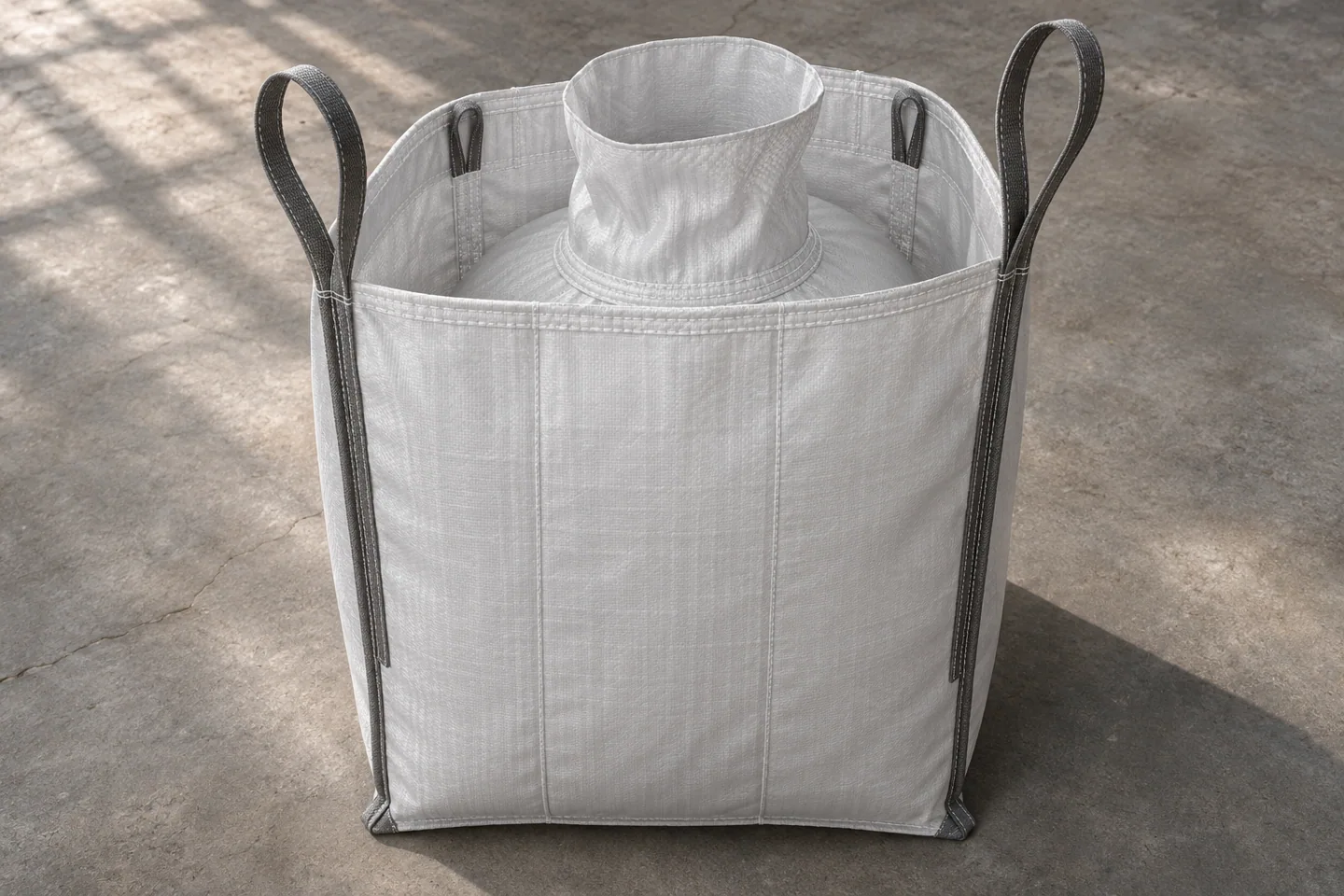
Measure a sleeve where it fits your coupling. Record finished diameter and usable length. Verify the lower closure and clear space at the receiving point along with the upper connection.
| Technical check | Measure sewn openings relaxed and record how much useful sleeve reaches equipment. Site fit, closure access and documentary approval each need their own result. |
|---|---|
| For approval | Use separate top and base checks linked to the exact drawings. |
Purchase evidence for the build
Ask for the finished drawing, sample identifier and any test documentation required. Review the exact configuration rather than relying on a product photograph or a fabric specification alone.
- Ask for repeatable approval recordsA factory file can connect the chosen material and drawing to the signed sample and production identifiers. Define what the lot record must show before placing the order.
- Acceptance recordRequest the checked values, acceptance ranges and evidence matched to the ordered design.
The dimensions that define a dual-spout build
In one enquiry for mineral powder, the buyer supplied the bag body dimensions and measurements for both sleeves. The quoted upper and lower sleeve diameters differed. Treat each as a separate interface and mark the diameter and reach independently on your drawing.
Upper and lower diameters, usable reaches and closure placement each need their own measurement. A fitted insert adds its own neck that can change the usable access at either end.
Use the actual filler and hopper drawings to approve both interfaces and the liner.
Next step with the factory
Send your material, target load, bag drawing or photo, destination and estimated quantity so we can discuss the applicable construction and sample.
Request a Quote- Send a brief a factory can convertDescribe product, fill load, bag limits, station geometry, evidence need, quantity and destination. Mark where you want a different construction from the retained sample.
- What the factory can reviewAsk for the proposed material, construction and approval checks on the same file.
Junfeng Road, Qingdao, Shandong, China
[email protected]WhatsApp +1 404 203 0971
+86 18506421208
Continue your review
Match the approved sample and drawing to the specification, lot and packing marks.
Compare fabric coating, a fitted insert and the actual closure at the bag openings.
Include a drawing or current bag reference, what you pack, the equipment, quantity and delivery destination.