25 and 50 kg Rice Sacks for an Existing Sewing Line
For 25 kg and 50 kg rice, trial a clear woven PP sack and a BOPP-laminated print option on your sewing equipment. The laminated listing shows both weight options and three reference sizes. Measure each filled sack and the fabric remaining above the grain before you select a size or approve the printed face.
Before requesting a sample
- The starting specificationA 25 kg and a 50 kg order require separate bag dimensions and filled trials. Compare clear woven PP and printed laminated BOPP options at each weight.
- Inputs for your first reviewRecord fill weight, bulk dimensions and the sewing head for each size.
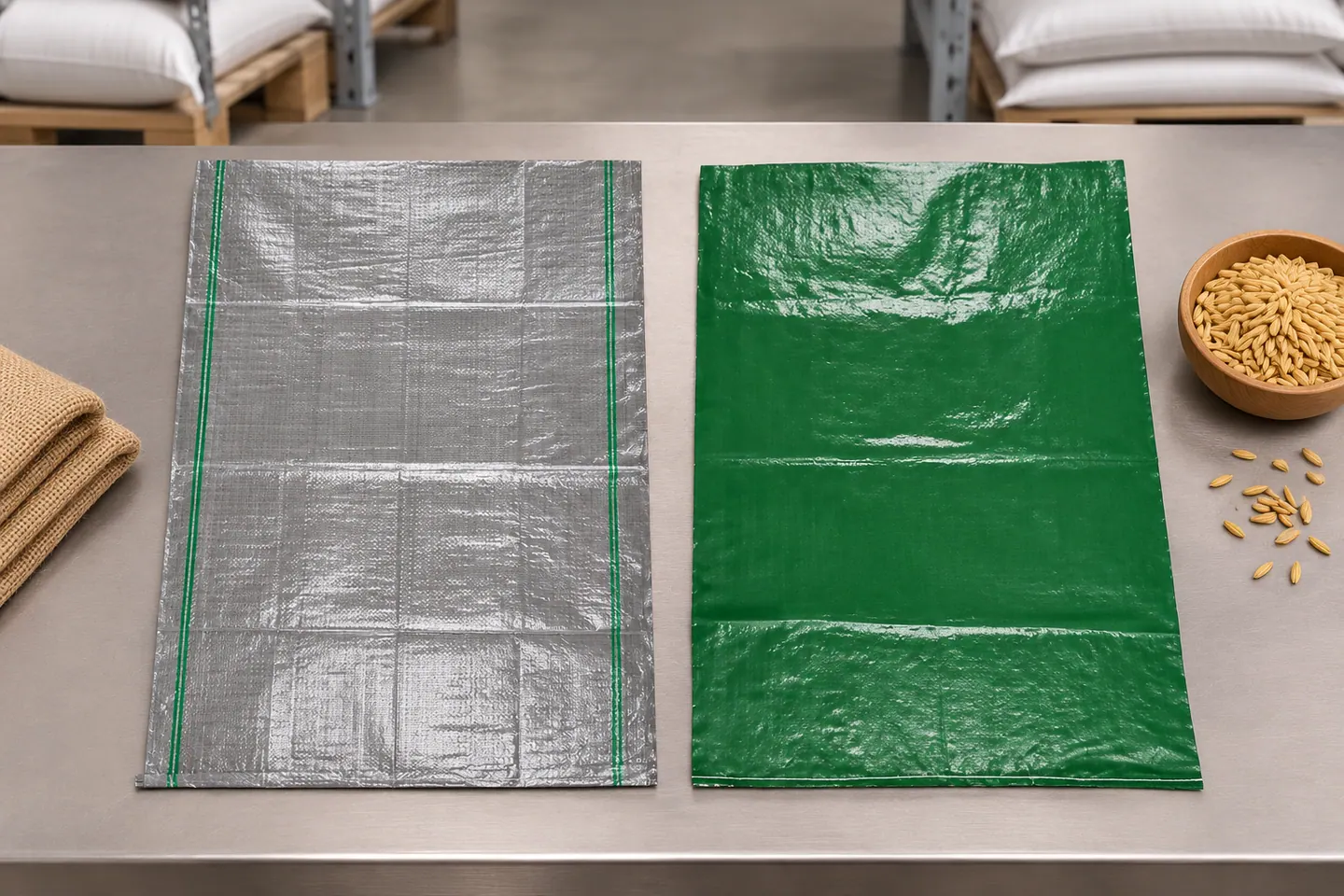
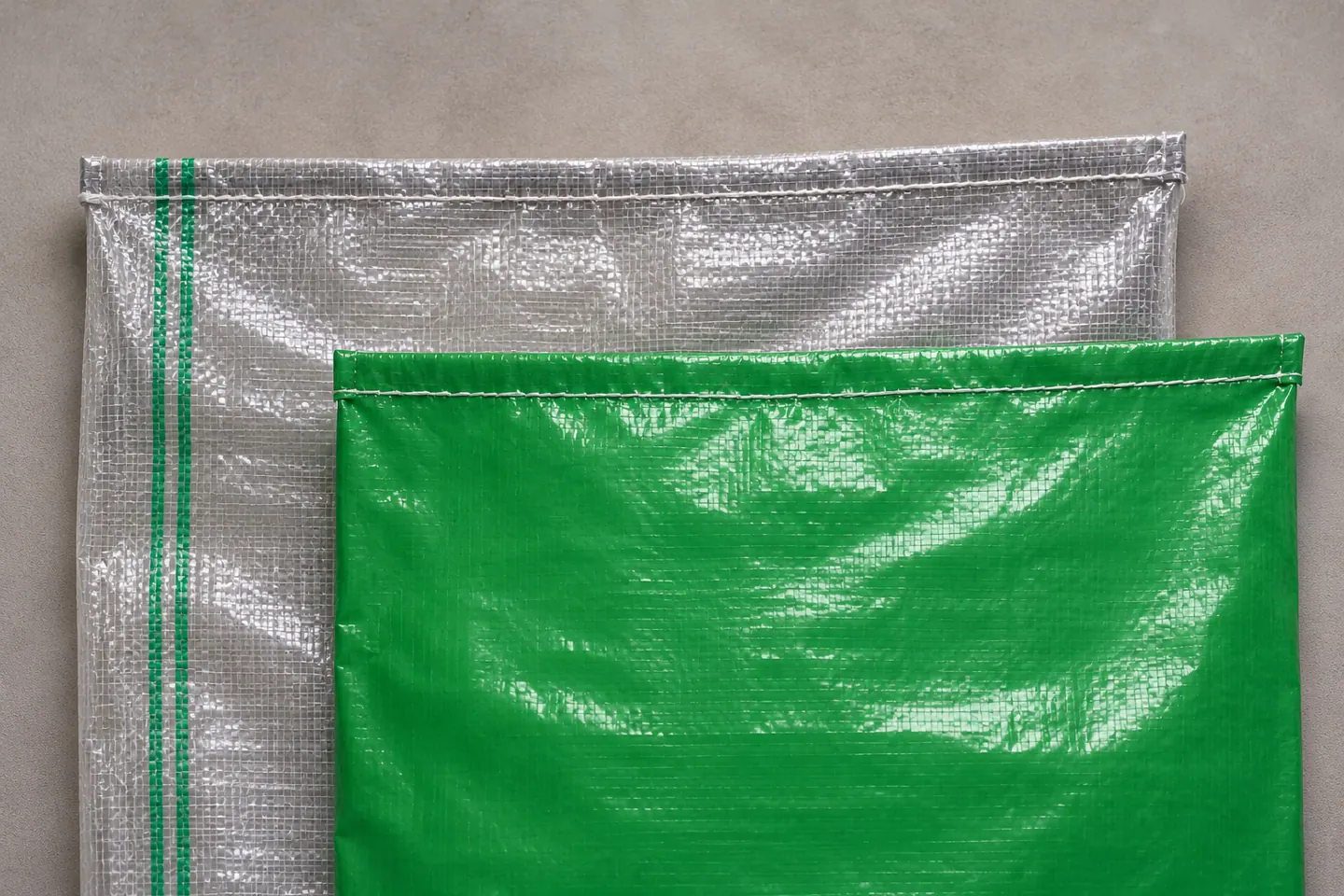
Clear woven PP and printed BOPP samples
Qingdao Novapack Packaging Co., Ltd. supplies these catalog options. Send your specifications so we can identify the construction, sample details and records you need for the quoted product.
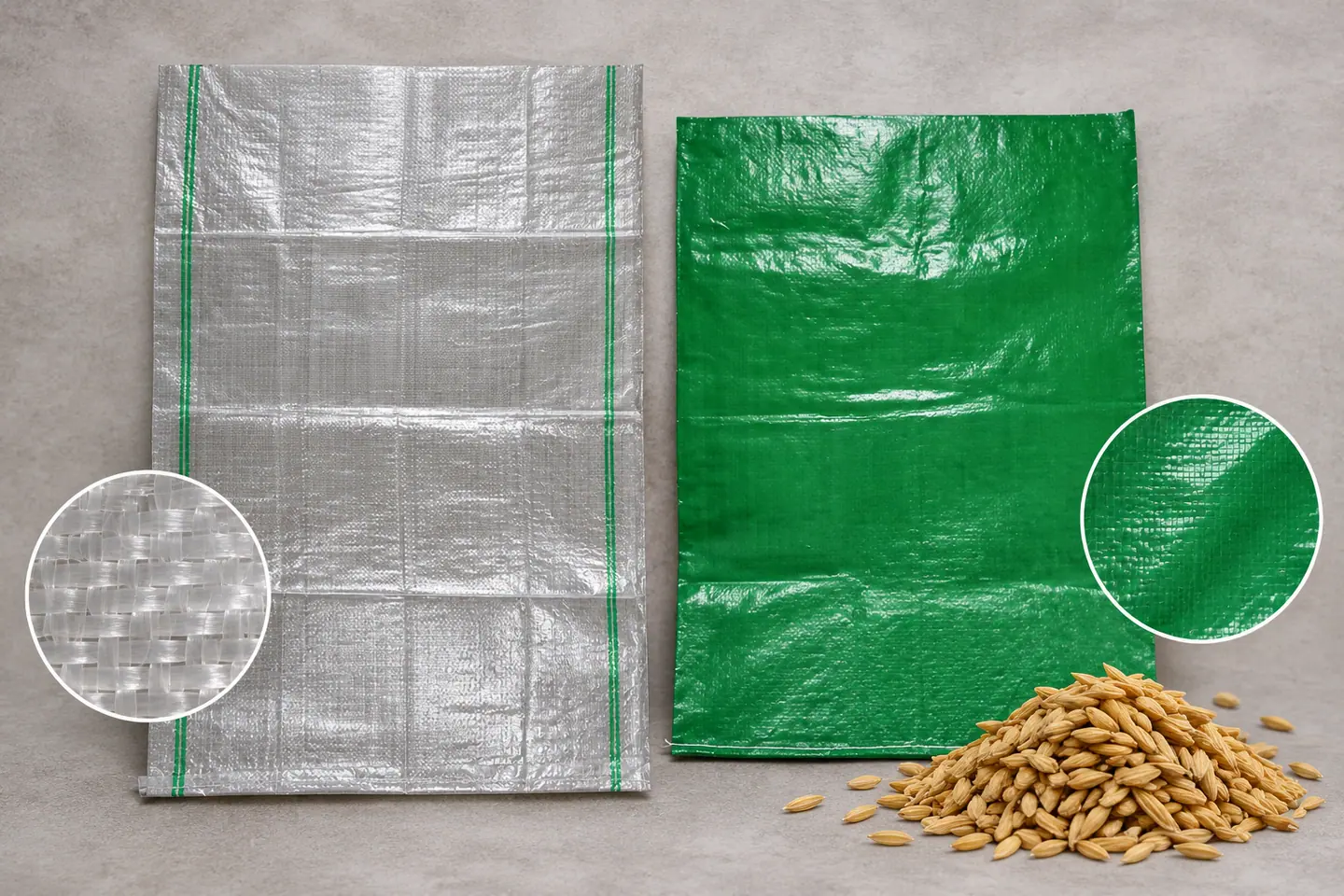
The clear sample lets you assess grain visibility through the fabric. The laminated sample gives you a print surface to evaluate alongside your bag specifications and pack design.
Compare clear woven PP and printed laminated BOPP options at each weight.
Use the result to rule out unmatched models before requesting a production quote.
Record empty length, grain height, top allowance and stitch position at both target weights. Establish the face orientation on a filled artwork proof.
Compare catalog candidates
| Catalog candidate | What the description shows | What to confirm for your order |
|---|---|---|
| Clear PP Woven Rice Sack for Rice, Corn, Sugar and Flour Packing | Clear woven PP rice sack candidate | Run grain visibility and stitching checks with your actual rice grade |
| Customized White BOPP-Laminated Polypropylene Woven Rice Bags | BOPP model lists 25 and 50 kg options and 40 × 60, 50 × 80 and 60 × 90 cm examples | There is no one-to-one size-to-weight mapping. Trial both sizes with your grain and sealer feed |
| Offset-Printed PP Woven Sacks for Rice and Corn Packaging | Offset-printed woven sack alternative | Compare print and a physical stitch sample before selecting the retail finish |
Technical references FDA food-contact component guidance · EU food-contact material legislation
Woven Body, Lamination and Sewing
Flat PP tapes are woven to make the sack body. A printed BOPP layer can be bonded to the woven substrate where specified. Cutting and base conversion establish the finished size. Examine which part of the top margin reaches your sewing head and whether a folded or sewn area hides critical artwork.
Technical background PP tape for woven packaging and FIBC fabric
The sack depends on the fabric and conversion seam. A printed BOPP laminate adds a separate artwork surface and changes which face goes into the design proof.
Ask for a material stack and a proof tied to a finished reference sample.
The filled sack at the sewing station
Use your usual rice and normal feed arrangement. Record the mouth position, the amount of fabric to fold and the sewn seam after the sample leaves the machine.
- Measure free material at the sewing headCheck the top allowance with the actual filled weight before sewing. Excess headspace or an uneven fill can change how the sack enters the machine.
- Acceptance recordRecord usable sewing allowance, stitch location and the signed sample ID for both weights.
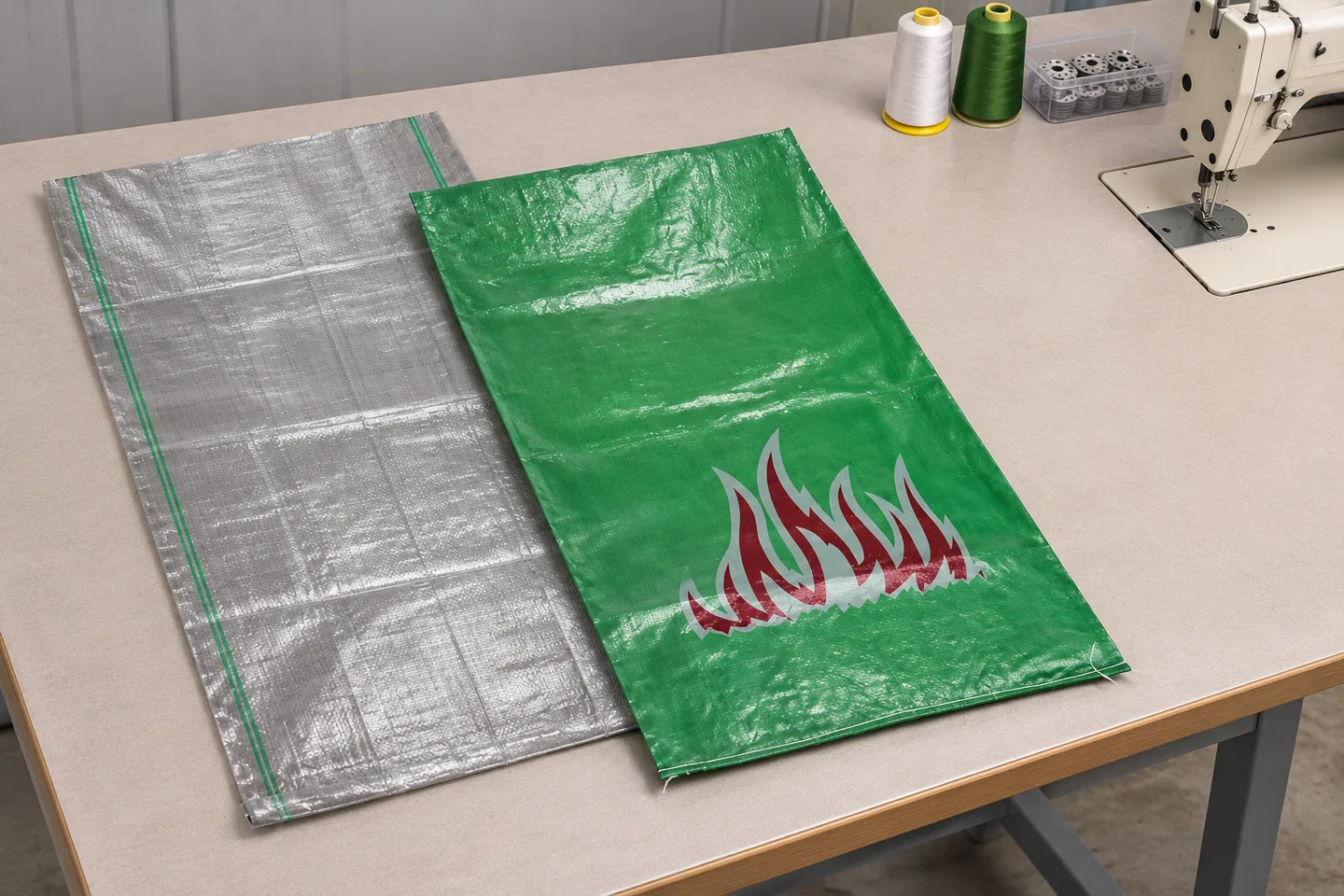
A print proof for the retail face
Mark where the artwork should sit relative to the top fold and side seams. Use a physical proof to check colour, positioning and visibility on the filled sack.
| Technical check | Place key type and mandatory marks away from side folds and the sewing line. A flat proof cannot show what folds or creases cover once the sack is filled. |
|---|---|
| For approval | Approve a face photo on a filled bag alongside the flat proof. |
Food-contact documentation by material
Identify which layer touches the rice and the market where you sell it. Ask for documents that cover the chosen materials and the conditions of contact.
Identify which component touches rice, including any insert or film. Ask for material evidence for the intended market and relevant use conditions tied to the exact option.
File document scope, names of the relevant layers and proof revision with the approval.
Bag-mouth samples in the trial
Keep a few empty samples with the exact top finish. Your line team can compare the cut edge and fold on both sacks before running a filled trial.
- Try feeding and sealing at production conditionsUse the normal grain grade and bagging sequence and compare mouth alignment and any sewing issues. Keep any setup change visible in the record.
- Acceptance recordLog filled weight, machine settings and seam appearance for each candidate.
Finished pack checkpoints
Use the same sewing line and rice grade for the comparison. Keep records of seam appearance, bag dimensions and any splitting or material loss during your approved checks.
| Technical check | Compare panels for legibility and check the sewn closure, local damage and packed dimensions. The 50 kg version can crease and handle differently from the 25 kg version. |
|---|---|
| For approval | Use those distinct observations to release a separate SKU for each size. |
The laminate beside the seam
Look at the area where the printed laminate meets the seam or fold. Approve the look on a finished bag and record the artwork version and bag material together.
- Inspect laminate away from and beside the seamCreases at a stitch line and adhesion in the flat panel are two inspection locations. Review the reference finish at each location after the bag leaves the sewing station.
- Acceptance recordPhotograph each location and retain the sample roll or production revision that matches.
A rice sack trial order
Send the two net weights, bag dimensions, mouth and stitch requirements, artwork and sample quantity. Include the destination market and the items your team must approve before ordering.
Provide the rice grade, fill weights, artwork, pack quantities and sewing hardware. Request separate prices and documentation for each bag surface and weight.
Ask for clear quote lines for bag, artwork setup, liner option and freight terms.
Contact and Quote Details
Send your specification or a reference sample and include the order quantity and destination. Use the inquiry form to start your request. Send drawings or sample photos by email.
- Contact the Qingdao teamTell us what you pack or protect, and identify the operating condition that makes or breaks your purchase. Put the reference sample or drawing number in the message subject so it stays with the order.
- What the factory can reviewAttach the necessary evidence and ask for a sample, drawing review or quotation as the first deliverable.
Junfeng Road, Qingdao, Shandong, China
- [email protected]
- +1 404 203 0971
- Phone
- +86 18506421208
Continue your review
Compare this guide’s equipment, material and sample checks with your requirements.
Prepare the quote, sample count, artwork decision and delivery information on one request.
Include a drawing or current bag reference, what you pack, the equipment, quantity and delivery destination.