
Low-Profile Lined Concrete Washout Bags for Tight Sites
Start with your lowest chute height, available ground space and expected washout volume. The 175 × 105 × 40 cm lined catalog bag gives you a starting footprint. Ask for tested usable containment, liner condition and hold time before approval. Have the site team assess any loaded movement separately.
Before requesting a sample
- The starting specificationCheck the lowest chute position, base footprint and access route. A shallow empty bag can still need more opening space when the liner is in use or the rim folds.
- Inputs for your first reviewSend the height sketch, intended usable volume and the required observation period.
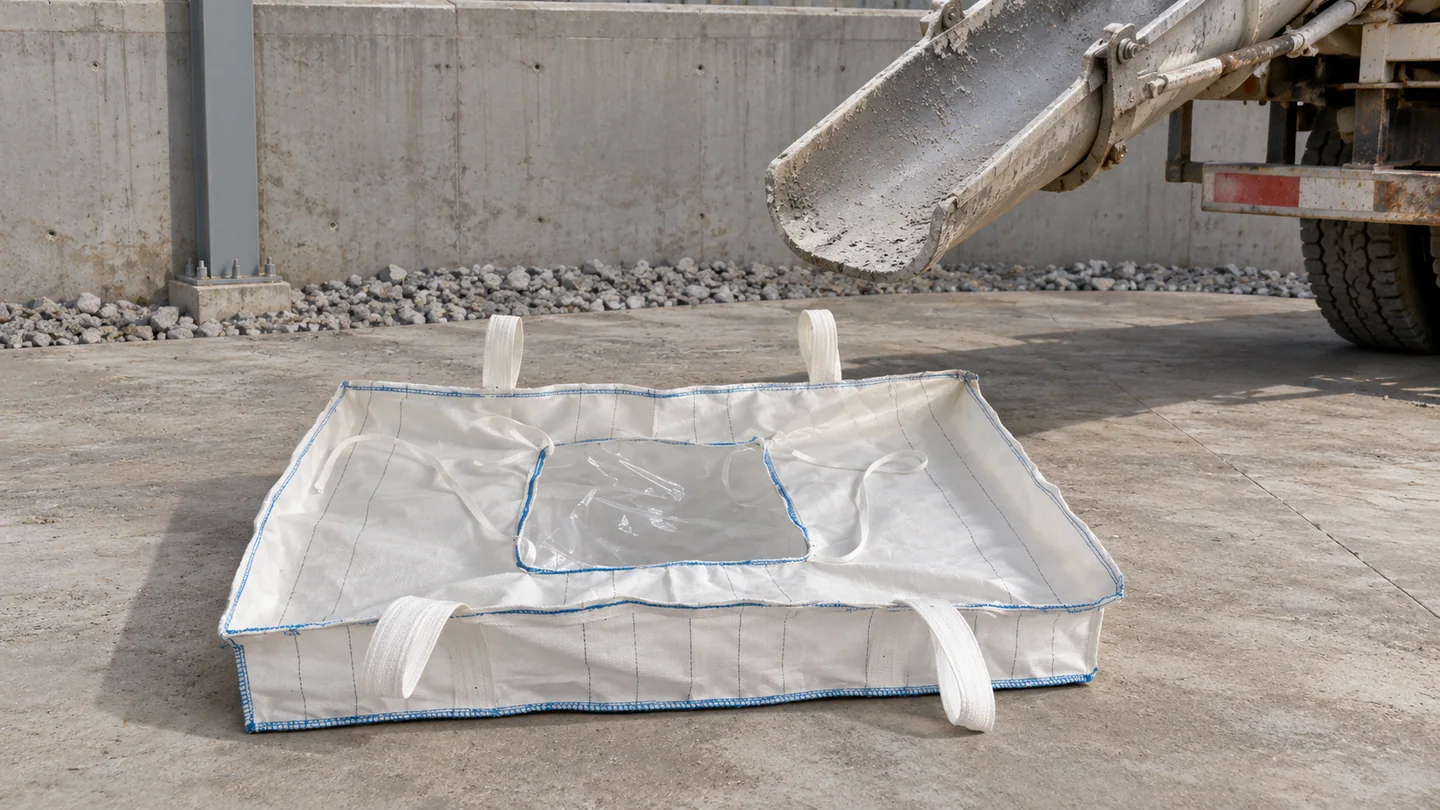
Chute and footprint measurements
Qingdao Novapack Packaging Co., Ltd. supplies these catalog options. Send your specifications so we can identify the construction, sample details and records you need for the quoted product.
Measure the distance from the lowest part of the chute to the supporting surface. Include the chute position at discharge and the full footprint available on the ground.
A shallow empty bag can still need more opening space when the liner is in use or the rim folds.
Use the result to rule out unmatched models before requesting a production quote.
Use the site’s actual rinse volume and hold time. The outer size and solid-load listing cannot establish usable liquid capacity or a supported lifting condition.
Compare catalog candidates
| Catalog candidate | What the description shows | What to confirm for your order |
|---|---|---|
| Custom-Footprint Lined PP Concrete Washout Bag with Flat Base | 175 × 105 × 40 cm reference geometry, open top and flat base | Confirm supported shape, effective chute clearance and tested usable liquid volume |
| PE-Lined Concrete Washout Bulk Bag with Open Top and Flat Base | PE-lined, open-top and flat-base listing | Request liner material and containment evidence for the intended washout |
| Lined PP Concrete Washout Bag with Open Top and Four Lifting Loops | Open-top lined PP option with four lifting loops | Set separate liquid-containment and loaded-movement approval requirements |
Technical reference EPA concrete washout guidance
Shell, Liner and Corner Construction
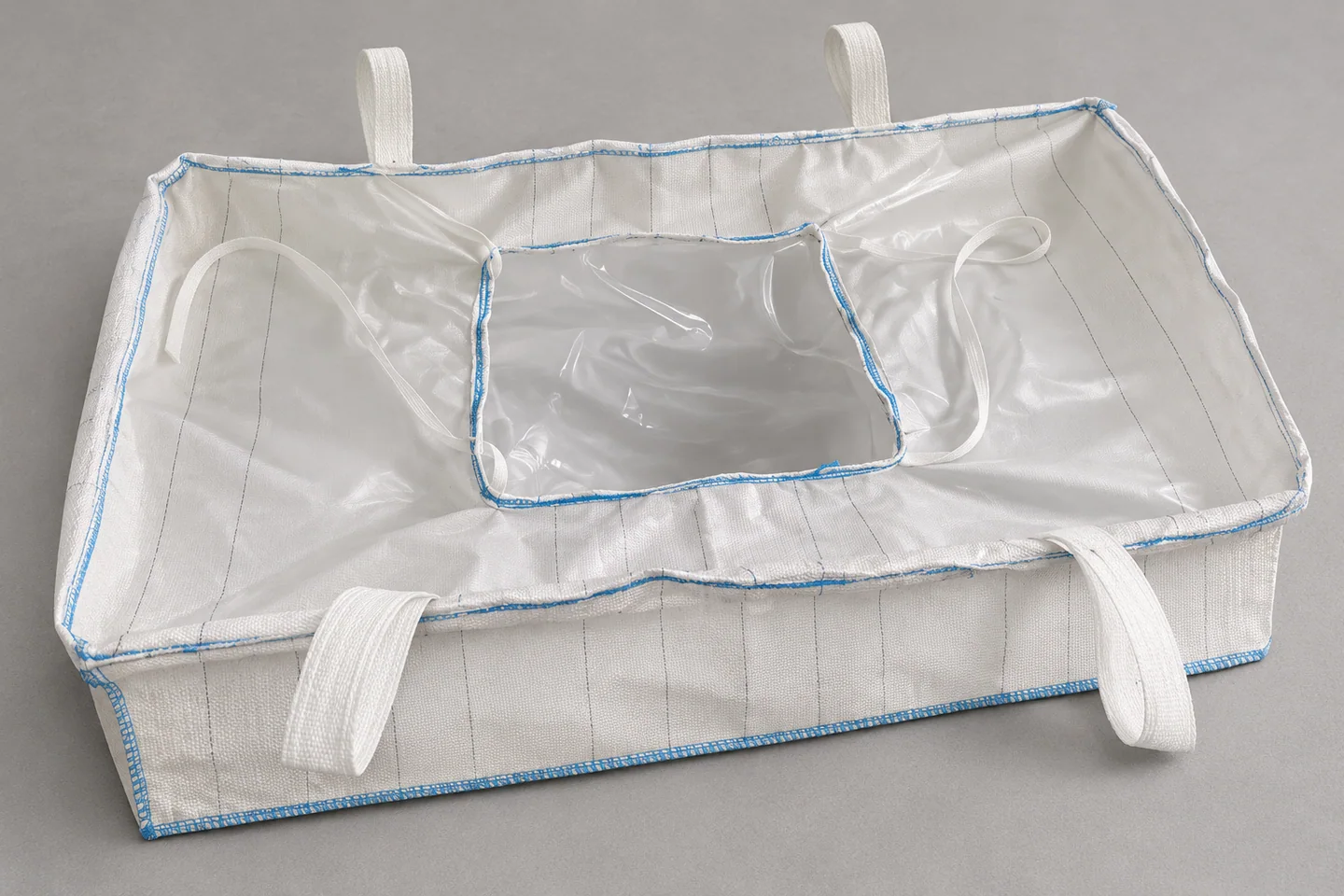
The outer shell establishes the footprint, and the inner liner and its joints establish the containment surface. Review how the liner folds and is supported at the corners and rim. Ask for records identifying the test medium, actual fill and time, then compare those conditions with your site plan.
Technical background PP tape for woven packaging and FIBC fabric
Custom-Footprint Lined PP Concrete Washout Bag with Flat Base
From Bulk Bag Sample to ShipmentThe outer shell supports the footprint while the liner, corners and sealed joins contain the contents. Folds may pinch where the liner turns upward at the rim.
Ask for the liner layout and a dry inspection of all fold and corner transitions.
The liner at the rim and corners
Look at the liner where it crosses the rim and folds into the corners. Ask for the material description and the construction of any seams or attachments.
- Track the result at each foldMark how the liner sits against the perimeter. Examine seams and corners for folds, pinch points and defects that might be missed when only the center is visible.
- Acceptance recordRecord the liner and shell sample IDs against a dry inspection photo set.
Evidence for the liquid and hold time
Request test records that identify the sample, the liquid or test medium, the fill level and the duration. Have your site team compare these conditions with the washout plan.
| Technical check | External length and width do not establish usable liquid volume. Ask for a test result for an identified configuration, fluid, hold period and observation points. |
|---|---|
| For approval | Have the site owner review tested conditions against the intended washout use and containment requirements. |
Site rules and disposal route
Record where the bag will sit, what will enter it and how the contents will be removed. Your site team should check the containment and disposal plan against local requirements.
Agree where the container will stay, which material is allowed and how it is collected or removed under site rules. Plan any handling before ordering the container.
Record the site approval and contacts responsible for containment and disposal.
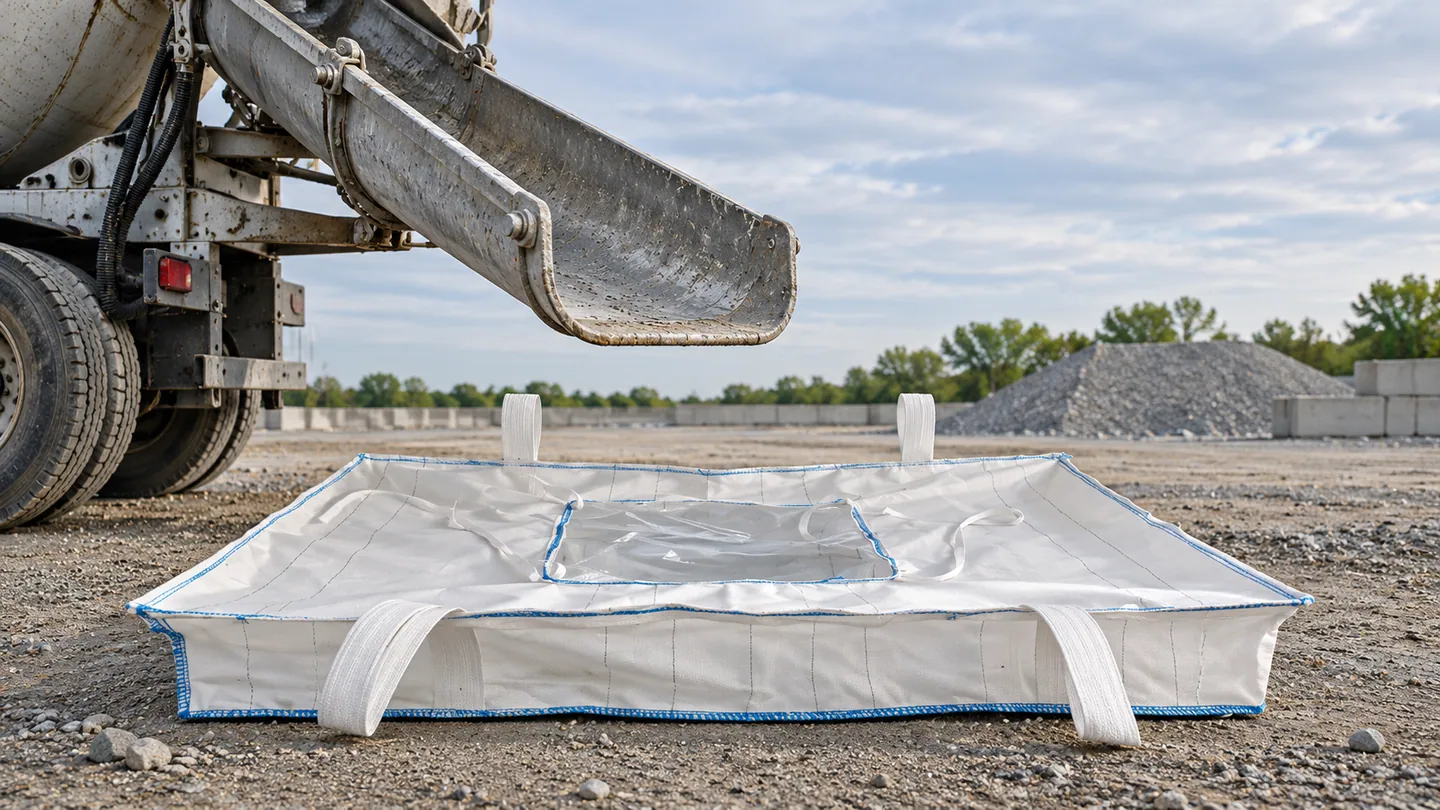
Opening clearance in the actual position
Use the site dimensions to confirm that the chute can approach the opening. Allow room for liner folds and any rim supports included in the approved setup.
- Check the rim at the actual chuteCompare the bag's access in placement with the outlet when the truck is at its normal position. Note any restricted access around the corners along the approach.
- Acceptance recordPrepare a dimensioned setup sketch for the factory and site reviewer.
Separate approval for any loaded movement
Discuss any loaded move with the site and request documents for the exact bag and contents. Keep the approval for the movement separate from the containment evidence.
| Technical check | A liner's containment result does not establish whether a loaded bag can be moved. Ask the responsible team to review the proposed method and evidence for the exact assembly. |
|---|---|
| For approval | Keep containment and handling approvals separate on the order. |
Condition checks on a dry sample
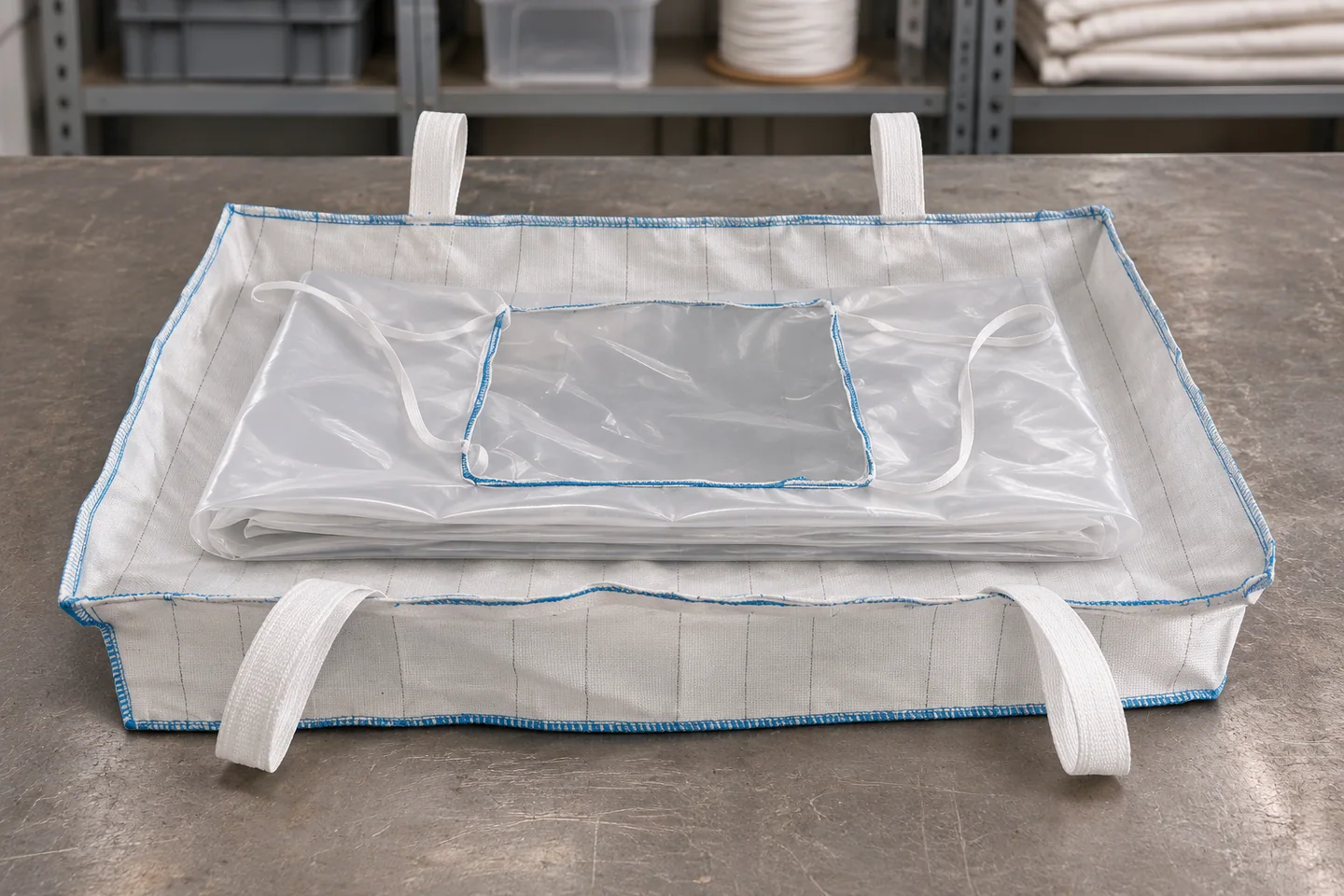
Check the base, folds and liner for visible damage before conducting an approved containment trial. Retain the sample code with the observations and photos.
- Inspect the dry sample before any approved testCheck the rim, corners and liner joins, then compare the label and overall geometry with the sample specification. A defect or ambiguous closure should be resolved during this stage.
- Acceptance recordRecord the exact sample and inspection locations before accepting a wet trial.
A washout site brief
Send the chute height, available footprint, liquid amount and hold time. Include the planned handling and disposal sequence so we can identify the information still needed for a quote.
Include chute heights, space, target usable fill, retention time, site constraints and requested quantity. Send photos showing the path from vehicle to bag.
Request a drawing, agreed containment evidence and the dry sample inspection before release.
Contact and Quote Details
Send your specification or a reference sample and include the order quantity and destination. Use the inquiry form to start your request. Send drawings or sample photos by email.
- Contact the Qingdao teamTell us what you pack or protect, and identify the operating condition that makes or breaks your purchase. Put the reference sample or drawing number in the message subject so it stays with the order.
- What the factory can reviewAttach the necessary evidence and ask for a sample, drawing review or quotation as the first deliverable.
Junfeng Road, Qingdao, Shandong, China
- [email protected]
- +1 404 203 0971
- Phone
- +86 18506421208
Continue your review
Follow the handoff from a signed sample to the packed order and receiving records.
Prepare the quote, sample count, artwork decision and delivery information on one request.
Include a drawing or current bag reference, what you pack, the equipment, quantity and delivery destination.